j.k.r. needs like one close friend to sit her down and go: “okay, but, go over this with me again. you decided the evil snake your dark wizard kept as a pet and vessel of his fragmented horrific soul – the one that has to be murdered in order to defeat the evil wizard – is in fact….an asian woman who was cursed to eventually become a beast and monster in her own body. am i getting this right? the asian woman turns into a snake because her bloodline is cursed and then she becomes the pet of a white supremacist with magic. you invented a body curse specifically for turning women into monsters and your first thought was not like, subversion of fairy tale misogyny but….to add a layer of racism? just trying to understand here.”
Or mayhaps, Political correcteness is in sure need of a close friend to sit down and be able to keep perspective?
Grindelwald, as a character on paper, is not racist. He doesn`t care, as long Wizards get to sit on the top of the pyramid instead of continuing to hide in plain sight and non-wizards consent to that view. Voldermort, on the other hand was indeed all about “pure blood”.
Is there anything in the trailer that claims or tries to claim that only female asians can be cursed? No? I didn`t see it either.
Can we just cool on this social modern trend of ruining storytelling?
me: hey friend of political correctness, there’s this trope that has been used to demonize asian women for the last idk, eighty years in cinema, and I think it’s kinda bad. how do you propose we put that in perspective. i mean the racist trope of the Dragon lady came out of Yellow Peril – which was extreme racism towards asians – and is identified often by making an asian woman look exotic and associating her with dragons or snakes and being very sexual. this whole reveal is a literalization of the dragon lady because this woman is physically going to become a snake. there are entire books written on this one form of racism.
Dragon Lady Stereotype: The Dragon Lady is an ethnic stereotype of East Asian women found in America and other Western societies. The Dragon Lady stereotype is one of the major East Asian woman archetypes utilized in American fictional works in literature, media, and theater and is defined as a strong, deceitful, authoritarian, or mysterious woman of Asian descent. Dragon Ladies are also calculating, clever, and sexually alluring exotic woman determined to seduce white men. The inception of the stereotype is hard to pinpoint, but its stereotypical nature has connections to the racism toward people of Asian descent during the Yellow Peril years in the late 19th century and the sexist attitudes toward East Asian women as sexual objects.
Historically, East Asian societies have long traditions of women serving in positions of power. However, these histories challenged the larger spectrum of Western patriarchal beliefs, which were particularly widespread during the early 20th century. Therefore, the Dragon Lady image is the antithesis of the submissive, subservient, and exotic Asian sex doll stereotype. The term has been applied numerous times to Asian film actresses and politicians throughout the 20th century.
[…]
Welch, Rosanne. Women in American History: a Social, Political, and Cultural Encyclopedia and Document Collection [4 Volumes], edited by Peg A. Lamphier, and Rosanne Welch, ABC-CLIO, LLC, 2017.
It’s almost like this is a thing that is actually a big deal, with a lot of history behind it. that’s not even the full entry, it’s longer than that.
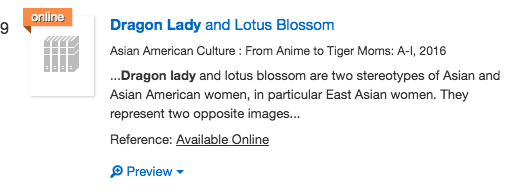
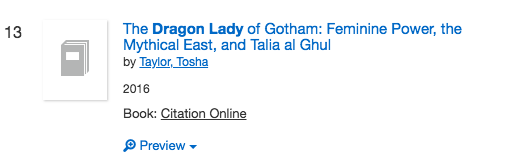
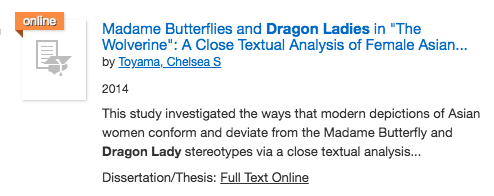
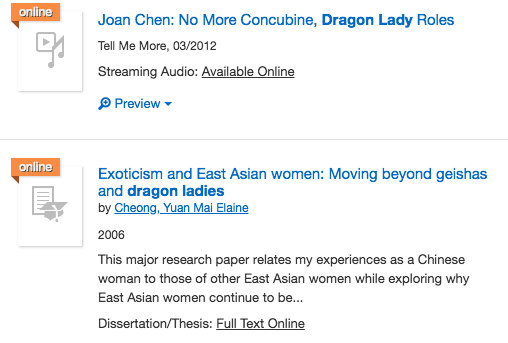
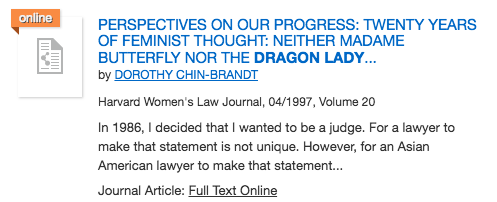
actually this is specifically something that gets taken up a lot in regards to popular culture because it’s a trope that originated FROM pop culture. just searching this for articles and books I get a lot of hits on the subject:
including ones that focus on things like Batman’s Talia al Ghul! And Wolverine!
it’s almost like this is somehow indicative of a pattern i did not personally invent
that affects women, particularly asian women
even in non-acting worlds, like idk, Law.
I just think maybe this is worth noting because it has a nearly century long history that is recognized by a range of scholars and just regular people who have been affected by it.
“Friend of Political Correctness”: yeah but like,,, without racism, how will we tell stories?


 Rush's tumblr archive