The first thing to keep in mind is that there are more of “us” than there are of “them.” Relatively few people in the world are allowed to call themselves real, manly cisgender men. So it’s time for the rest of us to find and hold some common ground. Women have got a great deal in common with gays, lesbians, bisexuals, and transgender people who’ve got a lot in common with queer people, who’ve got a lot in common with children and older youth. Sissy men and young boys have a lot in common with men of color. People with disabilities — physical and mental alike — have traditionally been denied membership in any gender in the America that once was great. Jews, Muslims, Buddhists, Wiccans and atheists stand alongside the ranks of the intellectuals, the effete, and town fools. In short, we are a whole lot of people, and all we have to do to stop the gender bullies from getting away with it—the only thing we have to do is stop thinking that our own unique gender-based suffering is worse than anyone else’s.
Tag: feminism
other leftists don’t want to admit this but one of the biggest barriers to radicalizing women who are liberal feminists is the rampant misogyny that runs unchecked in leftist spaces. not only do some leftists justify sexual violence by using post-structural theory, as well as glorify actual sexually violent male intellectuals, but they also just generally downplay misogyny & transmisogyny, patriarchy, sexual violence/violence against women, and things that women have to prioritize on a day to day basis. class reductionism is especially prevalent in these types of spaces. make fun of liberal feminists as much as you want to, and write those trite think pieces about how modern feminism is dead, but i’m not an idiot, and i know that leftist spaces are not inherently more feminist than other spaces. at least stop moaning and whining about how women who go to liberal feminism to seek some solace are dumb, shallow cunts who need to be Enlightened ™ by a paternalistic male leftist.
I’m not a man and I have no idea what you’re talking about.
That’s too bad because you could’ve kept this useless, worthless comment to yourself, and instead you could’ve made a new post! If you want to worship men so badly you can do that on your own time instead of making me waste mine!
I’m not worshipping men and in fact I hate them. I just don’t get the same vibes you do is all I’m saying. I can see how things would combine to create those spaces, though.
It doesn’t matter what vibes you get lmfao misogyny is still an actual problem in these spaces and for you to say “I don’t get these vibes” is so fucking callous and disrespectful like please exit stage right and stop fucking bothering me with this blatant incompetency
I just didn’t understand the wording I guess. I’m sorry.
“rampant misogyny runs unchecked in leftist spaces” is hard to understand?
Don’t confused ‘oppression’ with ‘first world problems’, it’s a rookie error among feminists.
Wow, okay buddy, you’re BEGGING for a takedown here.
First world problems? Not a thing. People who say shit like “first world problems” are massive racist, imperialist, dismissive assholes.
If you’re ever tempted to say “first world problems,” do me a favor, and pull down a map. Tell me EXACTLY where the “third world” is. Make sure you correctly identify Switzerland as part of the third world, and Turkey as part of the First World. Don’t forget that Djibouti is a part of the first world.
Literally sit down and learn what “third world” means and why people from nonwestern nations think it’s a total bullshit term.
Second: you think people in the so-called third world don’t care about shit like makeup, and love, and technology? You think they don’t care about internet harassment? You think women over there don’t care about street harassment? You think they don’t care about fashion and clothes? You think they don’t care about music and video games?
Because THEY DO.
Right now, there is a woman in burundi teaching herself how to do a cut-crease eyeshadow look. Guaranteed.
“Third world” nations have fashion shows and fashion magazines. They care about street harassment. They care about the internet. They play video games. They know more about anime than your sorry ass every will. And the idea of “first world problems,” which makes it sound like all women in “third world” nations are dealing with starvation, rape, war, acid attacks etc.
Is bullshit.
Rank.
Bullshit.
Women in Iran spend shitloads of money on makeup. Women in the DRC don’t just care about rape. Rape – the ONE THING westerners can be expected to know about women in Congo-Kinshasa – ranks NUMBER FOUR on the list of issues women in Congo want addressed. Political participation is number 1. Economic empowerment is number 2. Women in India are passionate about information technology, and you know what they hate? Coming to the United States, where Indian women in STEM are suddenly considered LESS GOOD than their male colleagues. My friends in Senegal taught ME how to download movies off the internet. Zimbabwe has a fashion week.
As Teju Coal points out:
“I don’t like this expression “First World problems.” It is false and it is condescending. Yes, Nigerians struggle with floods or infant mortality. But these same Nigerians also deal with mundane and seemingly luxurious hassles. Connectivity issues on your BlackBerry, cost of car repair, how to sync your iPad, what brand of noodles to buy: Third World problems. All the silly stuff of life doesn’t disappear just because you’re black and live in a poorer country. People in the richer nations need a more robust sense of the lives being lived in the darker nations. Here’s a First World problem: the inability to see that others are as fully complex and as keen on technology and pleasure as you are.
One event that illustrated the gap between the Africa of conjecture and the real Africa was the BlackBerry outage of a few weeks ago. Who would have thought Research In Motion’s technical issues would cause so much annoyance and inconvenience in a place like Lagos? But of course it did, because people don’t wake up with “poor African” pasted on their foreheads. They live as citizens of the modern world. None of this is to deny the existence of social stratification and elite structures here. There are lifestyles of the rich and famous, sure. But the interesting thing about modern technology is how socially mobile it is—quite literally. Everyone in Lagos has a phone.”
95% of the people who use bullshit expressions like “First world problems” have NO IDEA what life is like for people in the so-called third world. You just like sitting there derailing.
And for the record? As a white, western feminist, DAMN RIGHT I concentrate on issues in the United States. Because when white western feminists try to “save” women outside the west? We do a SHIT job of it. We’re the ones who bowl over actual congolese women, and what THEY want, and say that the #1 issue affecting them is rape. We become arms of the imperialist patriarchal complex.
Classic example: the guy who was ruling Egypt for the British got british feminists to help him in his anti-headscarf campaign in Egypt. Why did he hate headscarves? Because he wanted to *break the spirit* of Egyptians. Not because he gave a shit about women’s rights.
How do I know that?
Because he was the head of the anti-women’s-suffrage group in England.When women who live outside the west do awesome things, I will signal-boost them, and I will do whatever they think I can do to help. But I follow their lead. Because these are THEIR issues, and THEY know what matters to them. Not me.
FINALLY: My problems are not trivial. My problems are not bullshit. My problems are not to be dismissed with your racist, imperialist logic. Dress codes and makeup and music and books and video games MATTER. They matter to me. They matter to my life.
So fuck you.
And fuck your assumptions.
And maybe consider that YOUR first world problem?
Is that you can’t “see that others are as fully complex and as keen on technology and pleasure as you are.”::stands up and applauds this response::
Have I blogged this before? Still bears repeating.
“Here’s a First World problem: the inability to see that others are as fully complex and as keen on technology and pleasure as you are.”
GNC bi women who are dating or prefer feminine women are not predatory, manipulative or in any way like men
I mean… it depends on the individual person, just like with men.
The vast majority of them are not, just like with men. But you should still watch out for those who are.
me: gnc bi girls shouldn’t feel guilty about being attracted to girls based on homophobic stereotypes about us that nonsensically compare us to an oppressor class
you: but actually you should be constantly on the lookout for manly predatory bi girls, just in case one actually is a predator! i am very intelligent
Ah thanks. Im pretty sure my intelligence level is perfectly average, tho.
Whether a bi girl is manly or not has absolutely nothing to do with whether or not she is predatory. Predators can be of any gender, race, sexuality, gender exoression, etc. If recognizing this makes you angry, then maybe you should ask yourself why you want to pretend bi girls cannot be predatory.
Gay men can be predatory. Lesbians can be predatory. Trans women can be predatory. Trans men can be predatory. Non binary people can be predatory. Cis people can be predatory. Heterosexuals can be predatory. Black people can be predatory. White people can be predatory. Latinos can be predatory. Literally any person can be predatory.
If you wanna go ahead and stick your fingers in your ears and go “la la la I can’t hear you bi girls can nevervbe predatory la la la” well then, go ahead. But don’t pretend we all have to do the same along with you.
Not sure what post you’re responding to because the op literally does not say that gnc bi women cannot be predatory. It says that we are not inherently predatory for dating women more feminine than us. It is a direct response to people who try to push the idea that we are all predatory by virtue of being gnc alone.
Sounds like you might have some personal issues you need to work on if you projected all that onto a post that wasn’t intended for you, and which you clearly missed the context and point of so disastrously 🤔🤔🤔
The “
in any way like men” in @tomcats-and-tophats post refers to the ability to perpetuate institutional sexism.
There’s a difference between that and individual predatory behavior. Women, as individuals can be predatory but women as a marginalized class can’t perpetuate institutional sexism.
Teaching Consent to Small Children
A friend and I were out with our kids when another family’s two-year-old came up. She began hugging my friend’s 18-month-old, following her around and smiling at her. My friend’s little girl looked like she wasn’t so sure she liked this, and at that moment the other little girl’s mom came up and got down on her little girl’s level to talk to her.
“Honey, can you listen to me for a moment? I’m glad you’ve found a new friend, but you need to make sure to look at her face to see if she likes it when you hug her. And if she doesn’t like it, you need to give her space. Okay?”
Two years old, and already her mother was teaching her about consent.
My daughter Sally likes to color on herself with markers. I tell her it’s her body, so it’s her choice. Sometimes she writes her name, sometimes she draws flowers or patterns. The other day I heard her talking to her brother, a marker in her hand.
“Bobby, do you mind if I color on your leg?”
Bobby smiled and moved himself closer to his sister. She began drawing a pattern on his leg with a marker while he watched, fascinated. Later, she began coloring on the sole of his foot. After each stoke, he pulled his foot back, laughing. I looked over to see what was causing the commotion, and Sally turned to me.
“He doesn’t mind if I do this,” she explained, “he is only moving his foot because it tickles. He thinks its funny.” And she was right. Already Bobby had extended his foot to her again, smiling as he did so.
What I find really fascinating about these two anecdotes is that they both deal with the consent of children not yet old enough to communicate verbally. In both stories, the older child must read the consent of the younger child through nonverbal cues. And even then, consent is not this ambiguous thing that is difficult to understand.
Teaching consent is ongoing, but it starts when children are very young. It involves both teaching children to pay attention to and respect others’ consent (or lack thereof) and teaching children that they should expect their own bodies and their own space to be respected—even by their parents and other relatives.
And if children of two or four can be expected to read the nonverbal cues and expressions of children not yet old enough to talk in order to assess whether there is consent, what excuse do full grown adults have?
I try to do this every day I go to nursery and gosh it makes me so happy to see it done elsewhere.
Yes, consent is nonsexual, too!
Not only that, but one of the reasons many child victims of sexual abuse don’t reach out is that they don’t have the understanding or words for what is happening to them, and why it isn’t okay. Teaching kids about consent helps them build better relationships and gives them the tools to seek help if they or a friend need our protection.
I wish this post featured the OP’s name more prominently; it’s by Libby Anne of love joy feminism, and she writes fantastic stuff. A survivor of Christian patriarchal fundamentalism, she writes about parenting from the perspective of someone working through her own traumatic experiences. I love reading her blog.
I met my nephew (codename Totoro) in person for the first time when he was eight months old. Before this, I’d known him only through video calling. A few hours after getting home from the airport, my sister (codename Mystery) was holding him on her hip. I asked her, “Can I hold him?”
She smiled and said, “Ask him.”
“What?”
“Hold out your hands to him and see if he leans toward you or away from you.” So I did, and he leaned away, and I dropped the subject. Five or ten minutes later, he was leaning towards me, overbalancing and almost falling out of Mystery’s arms, and she said, “He’s asking you to hold him now.” So I did, and it was magical, getting to introduce myself to my nephew and the firstborn of the Sybil family.
I am all about respecting children’s agencies and teaching good boundaries. I didn’t ask at the airport, when Totoro was surrounded by new stimuli and needed the reassurance of his mother. I didn’t ask when we first got back either; I gave him time to settle down, get used to his surroundings, and get used to me in person instead of a moving picture on a cell phone screen. I thought I was respecting his boundaries. But it had never occurred to me that an eight month old, who couldn’t speak or even understand most speech, might be able to establish his own boundaries.
A year later they came to visit again, when he was 19 or 20 months old. The weather was what we Northwesterners call “a bit nippy” and what thin-blooded Midwesterners like my sister call “fucking freezing, are you kidding me?” As we were getting ready to leave the house, Totoro objected vehemently to the need for pants and a coat. Finally Mystery had me stand by and hand her things as she near-literally wrestled him into his clothes. He was screaming and kicking and saying, “No pants, no no, don’t wanna, no Mama.”
And as she worked, Mystery kept talking to him soothingly. “I can hear you saying no, and I understand that you don’t want to wear your clothes, but it’s my job to keep you safe and warm. I know you’re saying no, I can hear that, but it’s very cold outside and I have to keep you safe and warm.” Over and over, reassuring him that she understood what she wanted and that she had a good reason for ignoring his wishes.
And it hit me all over again, an aspect of respecting children’s agencies and boundaries that had never once occurred to me. Because sometimes it is necessary to override their wishes. Part of being a good guardian is keeping them safe even when they want to play in traffic or eat nothing but candy. But I’d never thought about it from Totoro’s point of view, how frightening and how helpless it would feel to scream “no” into an unhearing void. Mystery made sure he knew he was being heard, he wasn’t being ignored, he was important enough to have people react to his words.
It’s just, geez. Every time I watch Mystery interact with Totoro I learn something new about agency and boundaries and just plain humanness. It blows me away.
It’s so so important to acknowledge your child’s wishes even when you have to ignore them. Let them know why you have to ignore them.

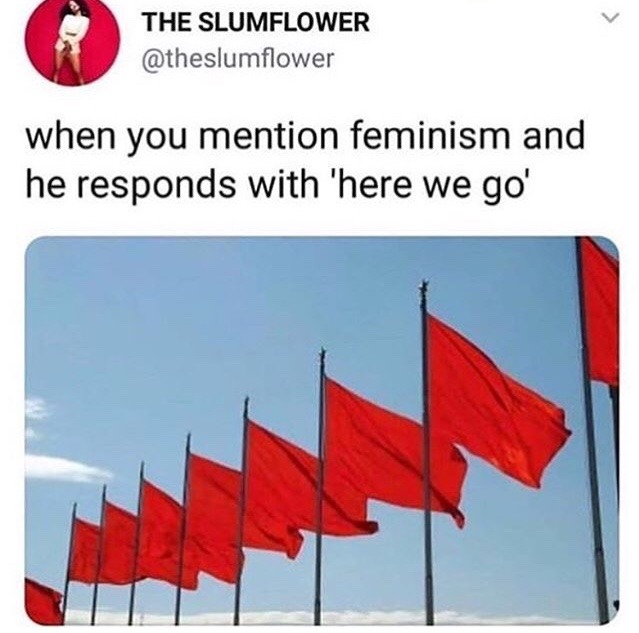
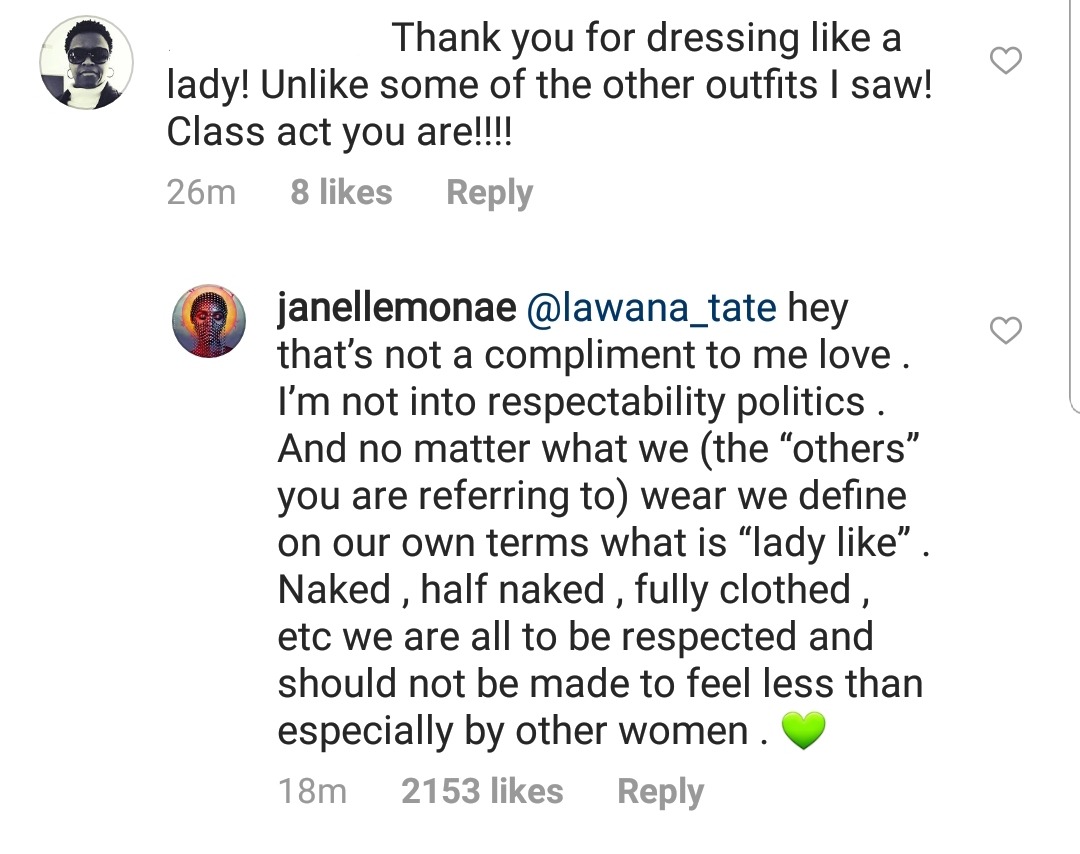


im all about crone feminism. feminism thats all about being bitter and old and living in a bog, swamp, or forest. all bout cursing all the men that dare to come near.
 Rush's tumblr archive