So, fun fact for all of you history dorks, but you know that legend about Cleopatra being so rich and trashy that she would drink her wine with crushed up pearls in it?
Pearls are mostly Calcium Carbonate. When they mix with acids (such as those in wine) they produce carbon dioxide like little balls of fancy alkaseltzer.
What Im saying is, call Cleopatra a trashy hoe all you want, but she was the trashy hoe who invented instant champagne. Bitch was living in 3018 while everyone else was in 18
#she died in 31 BCE so she was living in 2031 while everyone waa living in -31
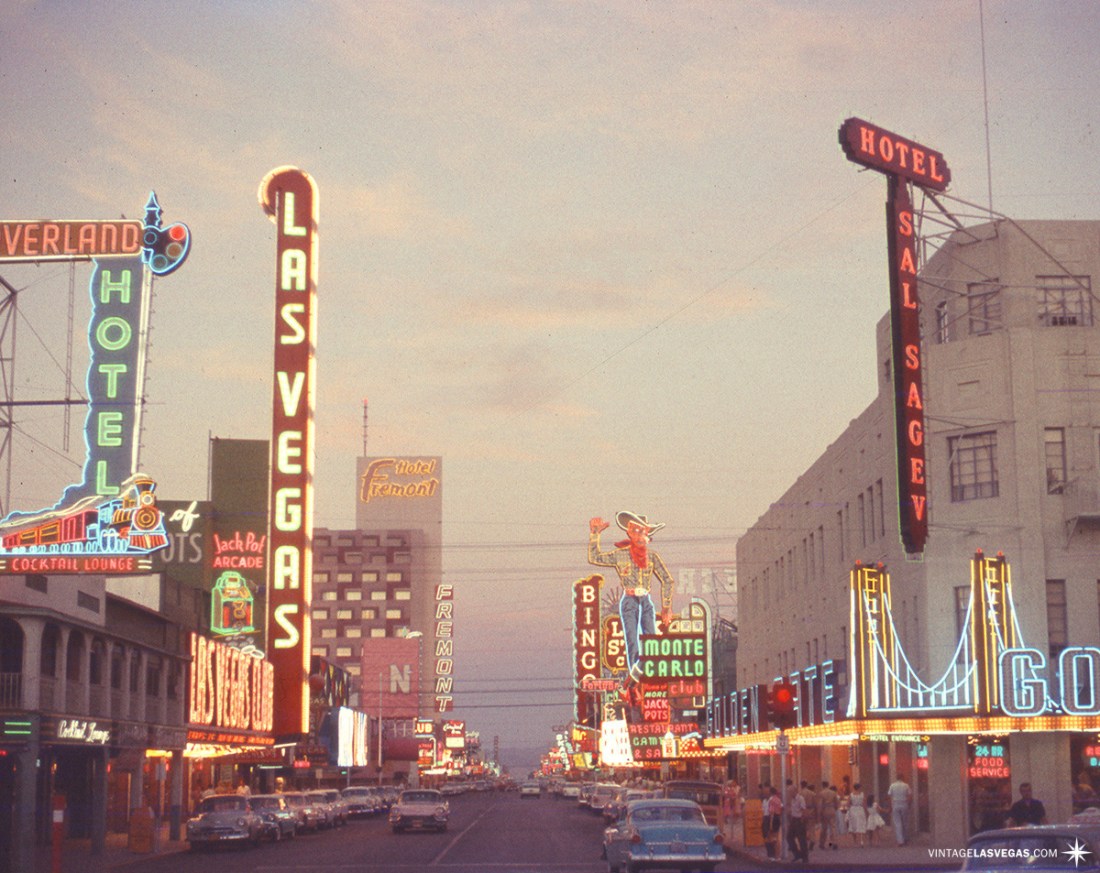
Spring 1957. Magic hour, Fremont St. Half way down the street on the left, The Mint sign under construction. Kodachrome slide processed by Technicolor, VLV.
they’re all following this jesus nonsense instead of the old roman religion
they only know what it’s like under the empire and not the glory of the res publica
all of them want to follow weird greek fashions like writing poetry and growing beards instead of following the mos maiorum and wearing togas
they’re all so used to this cushy “pax romana” nonsense that none of them want to conquer anything like their ancestors did, and they probably don’t even remember carthage
they have no idea what it was like living before the common era
have any of them ever risen up on their own to depose a king or stab a tyrant? i think not
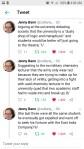
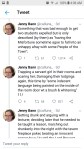
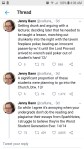
Captions (finally): Fourteen tweets from Jenny Bann @calluna_
I transcribed a collection of 18thC student disciplinary records once. Let me give a quick overview of the things that generation were doing…
Duelling with swords; getting loudly and raucously drunk and kicked out of taverns; going along to a dancing master’s classes to meet girls, being told not to dance with one of said girls, getting into a fight with the dancing master over it;
Making ‘obscene toasts’ when drunk; hassling the landlady’s daughter when drunk; taking a sedan chair home when drunk and trashing it (Glasgow sedan chairs could be hired like taxis in 18thC, there were even designated sedan-chair pickup ranks)
Getting drunk and damaging somebody else’s lodgings to the point where he was “expelled from his Habitation and deprived of his Body Cloaths and the poor Remainder of his furniture to Satisfy the Landlord for his Rent”;
“having too many Companions always in his room, disturbing the house wt noise & breaking the furniture, as an evidence of which the Chairs in his room have no lefs than three times broke […] the expense whereof he promised to pay but has never yet fulfilled his promise”
Not attending lectures, and claiming when told off for this that ther was a university regulation saying students on his particular bursary only needed to attend 1/3 to pass, leading to two professors combing through rules ofr nonexistant regulation,
Arguing at the university debating society that the university is a “dusty shop of logic and metaphysic” and students would be better off just going to the theater
Suggesting to the ex-military chemistry lecturer that the army only wear red because they are trying to make up for their lack of virility ; getting into a fight with said chemistry lecturer in the university quad that two academic staff had to wade into a d break up;
(the last three were all the same student; he eventually got expelled and went off to seek his fortune with the East India Company)
Something that was bad enough to get two students expelled but is only described (by them) as “having the Misfortune sometime agoe to fall into an unhappy afray with some People of teh Town”;
Trapping a servant girl in their rooms and scaring her; damaging their lodgings again, this time by “some indecent language being painted on the inside of the room door wt a brush & whitening”
Getting drunk and arguing with a lecturer, deciding later that he needed to be taught a lesson, marching out drunkenly into the night with the tavern fireplace poker, beating an innocent passer-by w/it until the Lord Provost arrived to wrench said poker out of student’s hand
A significant proportion of these students were planning to go into the Church, btw.
So while I agree it’s annoying when your undergrads don’t do the reading and plagiarize their essays from SparkNotes, I struggle to believe they’re the Worst Student Generation Ever.
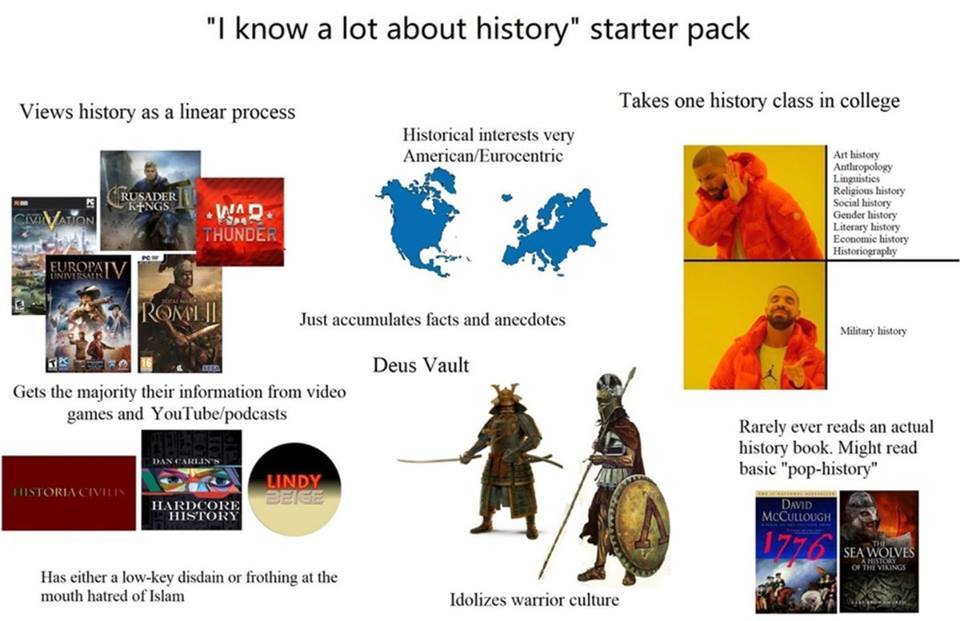
– it’s okay to have interests that are specific to one area/culture, but don’t ignore the role nonwestern cultures have played.
– For the love of God don’t get historical information from video games, and be careful what you learn from YouTube.
– This connects to the “rarely reads actual history books” part. Pop history is very accessible and some can be good, but then you run the risk of things not being up to academic standards. We make fun of the History Channel yes but it’s warranted, I read am article they posted on one of my main historical interests and it was almost entirely wrong. Read some actual academic books ffs, not just the stuff you find at Barnes and Noble. And you also run the risk of picking up, say, Dan Jones.
– Who brings us to the warrior culture idolization. Our old friend Dan Jones* only likes the English kings that were warriors, like Edward III and Henry IV, and not kings like Richard II, ignoring the bad things the kings he like did and the good things the ones he doesn’t like did. And basic idolization ignores the reality of war and of the negative cultural factors that made those warriors, like in Sparta.
– Military history is important and can be fascinating, I’m especially interested in the Hundred Years’ War, the Burgundian-Armagnac Civil War, and the Vietnam War. But without taking into account all the other fields of history you only get part of the story.
– Yes history involves facts, obviously, but it’s not just a case of knowing those. You have to put them together and understand why something happened and be able to explain it, and see its significance.
Also does no one remember the starter pack meme the whole point is a collection of usually simplified examples that are associated with a particular thing, and this indeed describes a lot of people, who have a limited experience of studying history and view it from a narrow perspective that may be informed wrong and then cry when they’re told they need to study more to get a decently well-rounded understanding of the topic.
*Who is also ableist and homophobic to boot but I doubt the people this is aimed at would care.
Idk, this reeks of snobbery and gatekeeping. And I’m very pissed they throw in Dan Carlin’s excellent series as something to look down on.
God forbid anyone ever have casual interests
It’s not about casual interest it’s about interest with a narrow mindset of “only this part of history is important” (which is repeatedly seen in the notes of this it’s hilarious really). You don’t have to read a ton of scholarly books but at least 1) check your sources, places like YouTube are accessible to any schmuck with a camcorder and if I caught that an article on History Channel’s website got everything wrong on something I knew, what does it say for things I don’t know about and 2) don’t complain when you want to sound like you know a lot about history as compared to just saying you have a casual interest and someone suggests you consider more than the one part you like.
I am absolutely a Shakespeare snob. The difference is, Shakespeare is one man who wrote nearly 40 plays. History can be broadly defined as every thing that has ever happened anywhere before today. It’s too vast to be snooty about what people like.
I’ll agree that people who parade around acting like they’re an expert, when they barely know the wiki bullet points of a subject, are obnoxious. But who are you, or anyone for that matter, to castigate someone for delving into what interests them at a level not up to ‘Academic Standards?’ Even if they’re wrong and obnoxious, it’s not anyone’s job to police what someone “should” be learning about. Gently (or not gently) educating the general public about the finer details of things like art, history, science, writing, etc. has always been a pain for those who actually know what they’re talking about. It just is what it is. Frankly, I’m thankful there are people who have an interest in history in the first place.
Returning to Shakespeare, while I do get uppity about the reading and interpretation of the plays, I’ve never shamed people who only know the popular ones. I’ve never, for instance, said “Ugh, Hamlet is overrated. People should like X obscure play, cause it’s better!” That’s gatekeeping. I’ve never created a “Starter Pack for people who think they know Shakespeare,” and then just posted a bunch of pics of Midsummer photo edits, Romeo & Juliet quotes, and David Tennant as Hamlet. Cause that’s shitty.
You’re not listening to what I’m saying. I’m not saying you can’t be interested in one particular historical topic or period or event. I’m interested in military history– medieval, American Civil War, Vietnam– I’m talking about people who are so narrow-minded they think their topic is the ONLY one that matters, so I say the only thing that matters are the battles fought in the Vietnam War and I don’t think the sociopolitical issues in Indochina and then the two parts of Vietnam matter, because it’s not strictly military history it’s not worth studying. I’m talking about the mindset of people like this:
Buddy I teach history and you’re not going to learn everything from military history, especially about women, because in my experience unless you talk specifically about women, their role in warfare has been greatly marginalized. Art history is for people who are interested in art. Gender history exists because people exist, it’s just a part of social history. You’re not going to learn everything from just one perspective, don’t act like you can. Tell me, from your knowledge of the Hundred Years’ War, the political significance of the bilingual poetry of Charles d’Orléans. Oh wait that’s for sissies isn’t it. These are the people castigating others for what they want to learn, not me.
History is NOT just a series of wars and massacres and invention for more slaughter even though it seems that way (and I get very depressed thinking of it). If you say you know a lot about history, you’ll know it’s more than that even if you study just wars.
And the reason I’m so obnoxious is this is actually my job. I teach history. It’s like if it was math someone was interested in and said they knew a lot about, but they only know one part of it and they get things wrong. History doesn’t have set answers, that’s just an example of the same behavior. I said you don’t have to read big academic books on a topic. In fact those are usually not readily available to amateurs, you should see how much the book of Charles’s poetry I got for my birthday cost, it wasn’t pretty. But just be careful your source is good. That’s also part of my job, how to use good sources. An adult should know how to evaluate what’s a good source even if they’re not writing papers. Evaluate bias: because he only likes masculine warrior kings, Dan Jones is harsh on kings he doesn’t like, which gets gross with his evaluation of Edward II’s death and his ableism toward Henry VI that gives an inaccurate portrayal of the War of the Roses.
I’m teasing you about being a snob, it’s funny that you’d use that term to describe someone’s behavior and your own. It’s like me saying someone is pedantic, as that’s what I am. (Kinda funny you’d use hamlet as an example too lol). It’s a joke.
There are people like this out there? I hang out with some pretty cool history people. We all have our specialties. Some of us majored in history some work in history some just know things. Some people are broader than others, some know a lot about a few things, some know a little about a lot of things
But who
Thinks
Military
History
Is
Only history
And I say that as someone who learned basic tactics because Alexander the Great would have wanted her to. Our history is way bloody: wars lead to more wars. But I think the biggest flaw in how history is taught is making it a string of battles and kings and generals. History is about people.
Yeah, there are, they just usually don’t become serious historians (meaning anyone called a historian of some kind, not meaning necessarily a good one) except ones like Dan Jones, David Starkey, that kind. You’re exactly right, it’s a major flaw in the presentation of history that it’s just battles and stuff, not the stories of actual people.
In February 1566, Caalus sat on his throne and watched a procession of strange men march toward his house.
The Spanish admiral Pedro Menéndez de Aviles had assembled 200 soldiers, drummers, trumpeters, fifers, and a dwarf who was a gifted singer and dancer. They climbed to the peak of Mound Key, Florida, with the match cords on their guns lit and a biblical text on display—hoping to impress the indigenous Calusa monarch who ruled over a large chunk of South Florida at the time.
Now, archaeologists say they’ve found the first known traces of the long-lost building where this meeting took place. Their reconstructions suggest it was just as impressive as the Spanish missionaries described: a royal house that could fit 2,000 individuals. Read more.
As it turned out, it was the Scots, and not the English, who should have worried about treachery in the night. Despite having fought against Bruce for much of the conflict, David of Strathbogie, Earl of Atholl, had changed sides by late 1313, and was one of the three earls with the king at Bannockburn. Another of these, however, was the king’s brother, Edward Bruce, for whom Atholl had allegedly conceived a deep hatred on account of Edward’s desertion of his wife Isabel (Atholl’s sister) for a sister of Sir Walter Ross. It was claimed by John Barbour that this issue came to a head on the night of the 23rd, when Atholl and his men headed towards the Scots’ supply depot at Cambuskenneth. There, they slew Sir William Airth along with many of his men, and raided the supplies in the Abbey before leaving the area completely. For this crime, Atholl’s lands were forfeited and he was banished to England, but his descendants continued to cause trouble for the Bruce kings long afterwards.
Several miles away in the New Park, the Scots rose at daybreak and readied themselves for battle, as the morning of the 24th of June dawned clear and sunny. Robert Bruce had been convinced not to withdraw the previous evening, but while the victories of the previous day had been an auspicious beginning, the task facing the Scots was still immense, and the king did his best to hearten his army. Probably on the evening of the 23rd (though some sources say the next morning), he addressed them, in a speech which has been variously recorded by different sources, but was plainly inspiring to the Scots whatever its form, and if the next morning they felt any trepidation about the battle ahead, they seem to have been no less determined to face the challenge. The English chronicler Geoffrey le Baker’s account was written sometime after Bannockburn, and is likely embellished, but his description is no less compelling,
“On the other side you might have seen the silent Scots keeping a holy watch by fasting, but with their blood boiling with a fervent love for the liberty of their country which, although unjust, made them ready to die on her behalf.”
The previous evening having been the eve of the feast of St John the Baptist, the army had fasted, but now they received bread and wine, and masses were said. Walter Bower claims that Maurice, the Abbot of Inchaffray, having taken King Robert’s confession previously, presided over this mass, before making his own speech to the host and then leading them onto the field, walking ahead of the army with cross in hand. The Scots quickly formed up in their divisions, almost all, including the king, being on foot, many carrying axes at their sides and spears in hand. As already mentioned, most sources state that there were three divisions, two in front, and a third in the rear commanded by the king, which may have included many men from Carrick and the west highlands and islands, as well as Lowlanders. The other two seem likely to have been commanded by the king’s brother Edward Bruce and Thomas Randolph, Earl of Moray, (John Barbour’s claim that there was a fourth division under the Steward and James Douglas being largely rejected by historians, though A.A.M. Duncan has raised the possibility that Douglas was serving under Edward Bruce, which would fit his movements later in the battle). Once in their divisions, the king likely created new knights, as was chivalric custom, though again Barbour’s claim that this was when Stewart and Douglas were knighted may have been poetic licence. This done, the army advanced, moving out of the New Park and down into the land near to where the English had made camp.
(One interpretation of where the second day of the battle may have taken place (Barrow’s), with the English camp in between the Pelstream and Bannock burns. Not my picture.)
The site of the fighting which took place on the second day of the Battle of Bannockburn has never been conclusively located, despite the best efforts of historians and archaeologists across the centuries, which have most recently included a huge archaeological dig to mark the seven hundredth anniversary. Some archaeological finds would seem to support Barrow’s hypothesis, which was also supported by Duncan. In this view, the English encampment is thought to have been on the fields which are currently sited just across the railway from Broomridge, surrounded by the Pelstream and Bannock burns, and it is even possible that the battle itself was fought down here, or perhaps at Broomridge itself (though there are now houses on the spot). It is also possible that the battle may have been fought up the hill from Broomridge, over the other side of Balquidderock wood, on the ground that Bannockburn high school now occupies. The position of the Bannockburn Heritage Centre near Borestone (to the west of the aforementioned sites) is actually very unlikely to have been the spot of the battle, though local legend states that Borestone takes its name from a nearby stone (which survived until the mid-twentieth century) in which Bruce’s standard was planted during the battle. This legend can only be definitively dated to the eighteenth century, however, and, though there are arguments for spots slightly further afield, most theories seem to agree on a spot somewhere in the vicinity of Balquhidderock wood. I cannot comment on this with authority though, and so I recommend personally reading up on the subject further, as there are other opposing arguments (and it’s also really interesting- see the references below for the full titles of Barrow and Scott’s books). For now though, I’ll return to narrating the battle.
The English army had not had a particularly restful night. Though some sources claim that the soldiers ‘spent the night in braggartry and revelry with Bacchus’, exulting in the rout of the Scots rabble they were sure would follow, other sources indicate that many within the army were anxious and restless. The cavalry had armed themselves and readied their horses in the night, and Thomas Gray states that when they saw the Scots march out of the woods, they mounted hurriedly in some alarm. The behaviour of their king and other leaders can hardly have been comforting: the English commanders were deeply divided, both on account of individual pride and on what course of action they should take. Seasoned veterans counselled against attacking that day, reasoning that the Scots would likely begin to melt away if the battle was postponed or become too tempted by the prospect of gaining spoils to maintain discipline. Gilbert de Clare, the Earl of Gloucester, though relatively young, is also supposed to have supported this argument, but according to the ‘Vita Edwardi Secundi’ many of the other younger nobles felt that delaying the battle was cowardly, while King Edward is said to have accused his nephew Gloucester of treachery. Gloucester did not take this at all well and, allegedly replying, ‘Today it will be clear that I am neither a traitor nor a liar’, he quit the king’s presence in anger and readied himself for battle.
(Part of one possible location for the English camp- and maybe the battle itself- between Broomridge and the A91).
To the Scots coming out of the wood the sheer size of the English army would have been immediately apparent, and according to some reports only the vanguard was distinguishable from the rest of the vast force assembled in front of the Bannockburn, the cavalry’s armour glinting in the early morning sun. From the English point of view, the far smaller Scottish army appeared like a ‘thick-set hedge’, the two foremost divisions bristling with spears as they advanced in their schiltroms. This type of tight-knit spear formation had its weak points, but the Scots were in a much narrower, and therefore more advantageous, position than Randolph’s force had been in the skirmish by St Ninian’s the previous day. Moreover, the Scots had been drilled thoroughly in the weeks leading up to the battle, enabling them to use the schiltrom offensively as well as to simply stand their ground. They moved swiftly in the direction of the English, but briefly paused as they came in sight of the enemy and the whole Scottish army knelt down to pray, both confusing and impressing their foes. Soon after they rose to their feet again, battle was joined.
The Chronicle of Lanercost maintains that the main battle was preceded by a short duel between the two sides’ archers, but if so this probably stopped as soon as the main bodies of the two armies clashed. It is unclear just how this clash occurred, but, while the ‘Vita Edwardi Secundi’ implies the Scots advanced first, most sources suggest that the English vanguard, under the earls of Gloucester and Hereford, suddenly charged the Scots schiltroms, particularly those under Edward Bruce. As this Scottish division came under pressure, Thomas Randolph’s division pressed ahead to lend support, and the English vanguard soon felt the full repercussions of charging straight into thousands of spears, as the Scots held the line and did not falter under the weight of the heavy cavalry. Jammed together the English cavalry found it difficult to fight effectively, and hadn’t the space to pull the schiltroms apart from the sides. Sir Thomas Gray, whose father had been captured charging a schiltrom the previous day, wrote:
“They [the English] were not accustomed to fight on foot; whereas the Scots had taken a lesson from the Flemings, who before that had at Courtrai defeated on foot the power of France.”
The twenty-three year old Earl of Gloucester seems to have been an early casualty. Whether in a fit of pique over the accusations of cowardice and treachery his uncle Edward II had levelled at him, or because he was still squabbling with his other uncle, the earl of Hereford, over who should take precedence in leading the vanguard, he had hurled himself at the schiltroms with much ferocity. When a phalanx that may have been under the command of James Douglas suddenly rushed forwards, however, Gloucester’s horse was brought down by the Scottish spears and its rider hit the ground, where he was lost in the fray.
(In this recent imagining of the battle, Gloucester may be identified by his arms- yellow (or) with red chevrons. The knight to his right is possibly intended to be Aymer de Valence, Earl of Pembroke while elsewhere in the background can be seen the arms of James Douglas, Edward Bruce Earl of Carrick, and Hugh Despenser the Younger. Not my picture)
***Gloucester’s death may have been a blow, and others in the vanguard probably met similar fates, but the Scots were not out of trouble yet. According to John Barbour, at some point the English archers moved to the side and began causing real problems for the spearmen in the schiltroms. From his position behind the main battle, holding his division in reserve, King Robert sent out a small cavalry force under the command of the marischal, Sir Robert Keith, numbering about five hundred and mounted on relatively light horses. Keith’s horsemen got in among the English archers and scattered them, and as the archers fled they ran into their own troops coming up from behind and worsened the crush. It may have been then that King Robert committed his men to the battle and the Scots began to steadily push their foes back in the direction of the Bannock burn, the English giving ground as their line collapsed and men fell backwards over each other under the weight of the Scottish onslaught. Not long afterwards, if Barbour is to be believed, an even worse omen appeared,, as what looked like thousands of Scottish reinforcements suddenly emerged from the wood and headed in the direction of the battle. In fact, this was no second army at all, but the camp followers and carters and other members of the supply train who had been left behind in the New Park (tradition has it they were stationed near the appropriately named Gillies’ Hill but this is more folklore than evidence). Seeing the fight from afar, they had allegedly chosen leaders among themselves, made banners from sheets, and marched down to the battlefield in time to join the struggle. Their arrival though, appearing like a second army, was a terrible blow to English morale, and many now began to flee.
From where the men in charge of Edward II’s rein were standing, the situation was beginning to look rather perilous, and it was now that the Earl of Pembroke and Sir Giles d’Argentan made the decision to remove their king from the battle. Edward was less than happy about being made to leave the field, but went, ‘much against the grain’, striking out at the Scots behind him with a mace. Once the king was clear, however, the famous knight Sir Giles d’Argentan took his leave of the party, claiming that he had never been accustomed to fleeing from a fight, and rode back into the fray, where he met his end. Pembroke and Edward, with the rest of their party, continued on towards Stirling castle as fast as their horses would carry them. Arriving at the gates of the castle, however, they were refused entry. Some sources imply that the garrison had switched their allegiance to the Scots, others that the captain Philip de Mowbray quite sensibly, pointed out to the king that once inside Stirling he would never be able to escape again. Whatever the case, the king’s party was forced to gallop hell-for-leather back the way they’d come, tearing past the King’s Knot and the battlefield in the direction of Lothian.
(Not my picture.)
The rest of the English army had not been so lucky. When the king’s standard was seen to leave the field, this signalled the complete collapse of the English defence, and men began fleeing in earnest, the Scots pursuing them with triumphant shouts, cutting down any they could reach and snatching up spoils as they went. In their haste to get away from the enemy, many of the retreating English soldiers fell into the ditch behind them, through which flowed the dark waters of the Bannockburn, and this stream now became a graveyard as it filled with the bodies of the drowned and the wounded. Others fled in the direction of the castle, and Barbour describes the castle rock as visibly crawling with men as they scaled the crag any way they could. King Robert was apparently still anxious about the English deciding to turn and fight again, however and attempted to prevent his men from chasing them too far, especially avoiding any attack on those in the park under the castle, where the hundreds of fleeing soldiers might yet regroup. However, if we are to believe John Barbour, the king still granted James Douglas permission to pursue the party containing the English king- if captured, Edward II would have been too large a prize for King Robert to pass up such an opportunity.
In all the confusion, and despite the area swarming with men, both friend and foe, King Edward made it safely to the Torwood and from there his party, numbering around five hundred, headed south-east. James Douglas and his men swiftly gave chase, and by the time they reached Linlithgow, the Scots were nipping at the heels of the English. According to Barbour however, Douglas’ force, numbering only around sixty, was far too small to engage them, even when they joined up with another force that had defected from the English, and the Scots settled for picking off stragglers in the rear. When the English paused at Winchburgh to rest their horses, the Scots paused too, lurking some distance away and keeping a careful watch, until the English remounted and the chase began again. Eventually though, their headlong flight paid off, and Edward made it safely to Dunbar, the coastal fortress belonging to Patrick, Earl of Dunbar, who was quick to demonstrate to the English king that he was still loyal, evacuating many of his own people to make room for the royal party. From Dunbar, a small, open boat was procured, and Edward, with only a few attendants, escaped by sea to Berwick. The rest of his party followed overland as best they could, though they were constantly harassed by the Scots of the borders. Many of their horses were left running wild, and were seized eagerly by the Scots.
A force of Welshmen under the command of Maurice de Berkley, heading towards the border of their own accord, were also much harried by the Scots, with many being taken or killed. In the south-west, Bothwell Castle received a large number of men seeking refuge, under the command of Humphrey de Bohun, Earl of Hereford. Unfortunately for them, the keeper of Bothwell, Sir Walter Gilbertson, was not as loyal as the Earl of Dunbar, and, having ensured that Hereford’s force was subdued, he soon brokered a deal with the Scots, and handed over his prisoners, including the earl.
By late afternoon, the battle was very much over. The Scots busied themselves clearing up the rich pickings left behind by the magnificent English army- their fastidiousness when it came to spoils partly account for the lack of surviving archaeological evidence. As well as horses, treasure, and armour, they may also have found Edward II’s seal, as he lost it in his haste to escape and had to borrow Queen Isabella’s when he finally arrived in Berwick. It was equally important to count the dead, and while it is difficult to gauge the number of Scottish losses, most accounts only give two notable names- Sir William de Vieuxpont and Sir Walter Ross, the latter allegedly a close comrade of Edward Bruce, being the brother of his mistress Isabel of Ross. The English death toll was far higher. As well as Giles d’Argentan, among the dead were
that hardy veteran of so many Scottish campaigns
Robert Clifford, Lord William Marshall, Edmund Mauley the steward of Edward II’s household, and Payne de Tibetot, whose young son and heir had been born not even a year before. The earl of Gloucester’s body was also identified among the carnage, which is said to have saddened King Robert, the two being close kin, and an honourable guard was appointed to wake the corpse that night. Gloucester’s body was later returned to England and buried in Tewkesbury Abbey, while several of the other English nobles were given honourable burials. The rest of the army, meanwhile, was interred in large pits.
(The earliest known artistic portrayal of the Battle of Bannockburn, from a manuscript of the fifteenth century Scotichronicon. Obviously not my picture.)
While Bruce may well have lamented Gloucester, his death also meant the loss of a hefty ransom for the Scots, but in that department at least they were generally well off, not least due to the capture of the Earl of Hereford. Humphrey de Bohun was later to be exchanged, with others, for the aged yet formidable bishop of Glasgow, Robert Wishart, and several of Robert Bruce’s kinswomen, including his queen, Elizabeth de Burgh, his sister Mary, and his daughter Marjorie Bruce, all of whom had been in captivity in England since 1306. Other captives were not of such high rank, but still had their uses- for example, Robert Baston, a Carmelite friar who had apparently been brought along with Edward II’s army to compose poetry commemorating his victory over the Scots. In the event, he was captured by the Scots and in return for his release was commissioned to write poetry celebrating their victory, though Baston’s poetry is less partisan than either side might have liked, and more grief-stricken than triumphant. I agree with Walter Bower in that Baston’s poem makes for interesting reading, particularly from the point of view of someone who was near the field at the time of the battle itself, so here are a few verses:
“Weeping in my tent, I lament the battles joined,
not knowing (God be my witness!) which king is to blame for them.
This is a twofold realm, where either half seeks to be master; neither wishes to be a supplicant subjected to the other. England and Scotland are two Pharisaic kingdoms. This one is at the top and so is the other, lest one or the other fall. Hence spring gaping flanks, spattered with rose-red gore, embattled ranks, mown down with bitter anguish; hence wasted strength, overwhelmed by Mars, hosts engulfed while hammering out mutual conflict; hence pallid faces, one drowned, another buried; hence manifold mourning, a noise that mounts to the stars; hence wars that arise and waste the resources of the land. I cannot recount the particulars of a massacre that transcends all reckoning
(…)
All round the scene are places heaped high with spoils. Words charged with menace are hurled back and reinforced with acts. I know not what to say. I am reaping a harvest I did not sow. I renounce the trickery of guile; I cultivate the peace that is a friend of right. Let him who cares for more assume the care of writing it. My mind is dulled, my voice is harsh, my work totally blurred.
I am a Carmelite, surnamed Baston. I grieve that I am left to outlive such a carnage.”
Sixty years later, John Barbour took a rather different view of the battle in his poem ‘the Brus’, written in the days of Robert I’s grandson. His work is a romance more than history, though it provides many details for events that we cannot find elsewhere and is therefore an invaluable source, if often problematic. Thus Bannockburn is presented in triumphant terms, but is not without its chivalric episodes, as in the story Barbour tells of the Yorkshire knight Sir Marmaduke Tweng. The survivor of Stirling Bridge had similarly managed to weather Bannockburn and, by hiding his armour under a bush, somehow managed to avoid coming across any of the thousands of Scots roaming the field in the immediate aftermath of the battle. When he happened to come across the Scottish king however, he spurred his horse in Bruce’s direction and yielded to him personally. Apparently impressed by this, King Robert ensured that he was treated well, chivalrously waived Tweng’s ransom, and sent him home to England laden with gifts.
Eventually, Stirling Castle, the source of all the troubles, surrendered to the King of Scots. It was then razed, like Edinburgh and Roxburgh, so it could not be held by the English again, but it was of course rebuilt later on, and survived to continue causing trouble across the centuries.
The Battle of Bannockburn did not end the First War of Independence. It didn’t even prevent Robert I from being faced by threats from other Scottish magnates, though it certainly did do much to bolster his position in his kingdom and rendered his rule a great deal more acceptable to many of his subjects. Even some English commentators seem to have reluctantly conceded his primacy, and Bannockburn certainly played a huge role in this- Sir Thomas Gray, for example, refers to Bruce as the king of Scotland for the first time in the paragraph immediately following his account of the battle. Edward II’s ambitions in Scotland were also massively affected, and though the English king did mount other campaigns against the Scots they were largely unsuccessful and were often less confident than even the Bannockburn campaign. Bannockburn was also a triumph for a new way of fighting, and some of the tactics used therein found their way into the style of warfare practised so expertly by the English on their French campaigns during the Hundred Years’ War, and other instances of late mediaeval warfare. Its importance in popular culture from the fourteenth century to the present day, should also not be overlooked, even if some examples are rather cringeworthy. All in all, whilst it is important to recognise that Bannockburn was not the pivotal, conflict-ending event it is often claimed to be, it is still a fascinating battle, associated with many compelling stories, and is of great historical significance, both for Scotland and Britain as a whole, which makes it well worth studying.





 Rush's tumblr archive