jews try and explain how intergenerational trauma works and functions in our families + communities and white gentiles r still like “so you get intergenerational trauma when anything bad has previously happened to any group of people like you??”
like i don’t know how to get y’all to stop wrapping your head around how these kinds of numbers affect a marginalized group:
a third of all Jews on the FACE OF THE EARTH died within a few years
like there’s just such a comprehensive failure to understand or empathize with what exactly that means. how many communities were destroyed, how many families were destroyed, how our languages were destroyed because most of the speakers were murdered, how many children grew up in the wake of this trauma, what it’s like to try and parent in the aftermath of a genocide that kills a third of your people (two thirds of all european Jews!), what it’s like to have the spectre of this hung over your head every single day from childhood
There’s this complete disconnect that a lot of non-Jewish gadje have about exactly what the Samudaripen (Holocaust) DID to our two populations. Like, there are entire subgroups that just don’t exist anymore… Seeing these numbers makes my heart hurt.
Nostalgia for Jews is a well-documented phenomenon in Eastern Europe, with cultural and even substantial commercial aspects.
In Ukraine, so-called Jewish-themed restaurants with pork-heavy menus compete for tourists, while figurines of Jews are sold at markets as good luck charms. In Poland, graffiti reading “I miss you, Jew” have become a common sight.
Beyond the kitsch, Jewish cultural festivals draw large non-Jewish audiences in Krakow, Warsaw and Budapest.
Some credit this trend to a feeling of loss over the near annihilation of once-vibrant Jewish communities. Others trace it a desire to reconnect with the pre-Soviet past.
But even against this backdrop, the fake Jewish wedding that was held Saturday in the village of Radzanów, 80 miles northeast of Warsaw, stands out as a remarkable affair.
Make-believe Jewish weddings — a regular educational event in Spain and Portugal, where nostalgia for nearly-extinct Jewish communities is also prevalent — are rare in Poland (locals in the village of Bobowa organized one in 2013). Even rarer are enactments as well-produced as the one in Radzanow.
Organized by the Radzanovia Association, a cultural group promoting Polish heritage, the event featured a few dozen non-Jewish volunteers, men and women, dressed in traditional haredi costumes. Some men wore fake beards and side curls – including ones that didn’t match their natural hair color.
Portraying the groom was Piotr Czaplicki, a journalist for the Radia dla Ciebie station. Czaplicki, who is not Jewish, got under a chuppah – the canopy used in traditional Jewish weddings — together with his make-believe bride, Julia Brzezińska, a local resident. They were “wed” by a fake rabbi in a show before villagers, whom the event’s organizers sought to teach about Jewish traditions.
To Jonny Daniels, the London-born founder of From the Depths, which promotes Holocaust commemoration in Poland, events like the one in Radzanów are “some kind of therapy taking place all over the country.”
But the event’s producer, Agnieszka Rychcik-Nowakowska, sees it as a way of commemorating the hundreds of Jews who had accounted for approximately half of her village’s population before the Holocaust.
“We want to remember all those homes of all pre-war Jews, who lived a peaceful life punctuated by the rhythm of holidays, family celebrations and more mundane events,” she told the news site Nasza Mlawa.
Jews first settled in Radzanów in 1710, and at their peak numbered about 500. By September 1939, when the Germans took over, the population had dipped below 300. Nearly all who remained would be sent to the Mlawa ghetto, never to return.
“We remember those who lived here before us and entered the memory of our grandmothers and grandparents. It was so recently,” said Rychcik-Nowakowska.
Elsewhere in Europe, Jewish-themed festivals are more common , bringing together hundreds of participants. There too, Jewish-themed events are held in the absence of a living, breathing Jewish community thanks to nostalgia and a desire to generate tourism revenue.
But in Spain and Portugal, for example, where hundreds of thousands of Jews were oppressed 500 years ago during the Inquisition, the passage of time has made goodwill gestures toward Jews less complicated than in the east. In 2013, Spain and Portugal even passed laws granting citizenship to descendants of Sephardic Jews – a move whose generosity contrasts sharply with the refusal by Poland and other East European countries to offer even partial restitution for property that was stolen from Jewish communities.
At the fake wedding in Radzanów, organizers turned to Teresa Wrońska, an actress from the Jewish Theater in Warsaw, to assure the wedding’s authenticity. She choreographed the entire affair — from the signing of the ketubah (the Jewish marriage contract) to the traditional Jewish music played by a band of locals and musicians from the capital.
Even the POLIN Jewish museum of Warsaw was consulted in staging the event, according to Nasza Mlawa.
The wedding is not the only attempt by Radzanów locals to reconnect with their village’s lost Jewish heritage. Last year, a high school student from the region, Cuba Balinski, initiated a project aimed at rededicating and reopening the village’s abandoned synagogue – a small but beautiful Moorish-style building that miraculously survived the Nazi occupation.
Balinski, who has secured the cooperation of the Foundation for the Preservation of Jewish Heritage in Poland for his project but is still looking for investors, is adamant about restoring the synagogue to a house of worship rather than having it turn into museum.
“If there is no Torah in the synagogue, than it is still just a building,” he told the news site Gosc Plocki. “But if we bring the holy book back, it will come back to life.”
I find this to be fetishizing a memory. If they cared about Jews, they’d do the work to interact with those of us still living.
(Note: folks who aren’t Jewish-by-birth, but rather considering conversion, I don’t recommend the order below for you. Start by studying then reaching out to a community or vice versa, please don’t start with observance without talking to a rabbi or similar.)
I’m sorry that your family wasn’t able to find a way for Judaism to work for them, but it’s fantastic that you want to explore your Jewish roots! Unfortunately, there isn’t really one single workbook out there. Torah and Talmud are really big and when you include interpretations and midrash there’s no one path to learning everything (nor is it possible for anyone to learn all of it).
Shabbat & Holidays
If you want to start bringing Judaism into your life right now, I’d recommend looking into starting your own traditions for holidays and/or Shabbat. I’m suggesting holidays as a place to start in part because there are lots of beginner friendly resources. BimBam, MyJewishLearning, ReformJudaism.org, and Chabad.org are just a few places to start online. There are tons of printed books specifically about holidays, and many basic/beginner Judaism texts will include something about holidays. (In addition, any remaining connections to Jewish religion your family has are likely to be to holidays. They may have old candlesticks or a Passover cookbook for example, or remember a Hanukkah song.)
In addition to learning about the holiday’s observance itself, many holidays have a connected text you can learn about.
If you stick around this blog, anyone on jumblr (especially @istodayajewishholiday), or myjewishlearning.com you’ll hear about each holiday as it comes up. Sadly, the next Jewish holiday isn’t for months (and Tisha B’Av even one I’d recommend for starting out). With that in mind, I’m going to direct you to some stuff about Shabbat observance and learning opportunities.
Shabbat is the Jewish day of rest, and the holiest day of the week. MyJewishLearning has some pretty good basics on it in their Shabbat 101 article, but there are as many ways to observe Shabbat as there are Jews. While there’s a (somewhat) set way to traditionally observe Shabbat, jumblr has actually been talking about other approaches. Speaking of lots of approaches, I recommend reading about different branches of Judaism and their different approaches. Even if you don’t feel comfortable joining a synagogue right now, Judaism is a communal religion and so lots of things won’t be possible (or as much fun) alone.
One way many Jews observe Shabbat is lighting Shabbat candles saying a blessing (BimBam has a video with the blessing here). If getting candles isn’t possible, lots of folks consider it okay (but not preferred!) to use electric lights. You can get specialized ones like this, but if you’re in a pinch, regular electric tea lights from a drug store (or I suppose a flashlight or closet light) could fulfill the obligation (although a closet/flashlight might not be as fun). It might sound like a bummer to use electric candles, you’ve still got a chance to beautify the mitzvah. Hiddur mitzvah, or beautification of a mitzvah, is a big part of Jewish tradition. As I just said, you could use a flashlight to fulfill bringing light into your home for Shabbat, but using beautiful candlesticks (or my next idea) shows how much the mitzvah matters to you and makes the mitzvah special. How are electric tea lights beautiful? You can make them beautiful! Electric tea lights could be decorated with sharpie, or enclosed in paper lanterns/cut-outs like these.
Maybe you feel like starting with just study is what’s best for you. If so, I’d recommend that you join a local Torah study group. Most synagogues have one (they might have a Talmud study group too, but I recommend starting with Torah). If you’re in college, you can check out your local Hillel (if they don’t have a study group, they’ll likely know of a student, rabbi, Jewish educator or professor who would be happy to study with you). If you don’t think there’s anything Jewish in your area, see if you have a local Chabad house (you probably have a Chabad resource!) that can match you with chavrutas (and know that Chabad, like all Jewish institutions, has non-universal perspectives on texts and on their significance/interpretations). If you’re really raring to go and can’t find anything, I’d recommend checking out some podcasts. Torah really needs to be studied with commentary, and preferably with a teacher. Sefaria (they have Rashi, a major commentator in English) or a Tanakh (JPS is good, or anyone that you can confirm isn’t Christian/Messianic) plus a good podcast would be the text best thing.
What to do when you can’t study Talmud
While I don’t want to brush off Talmud as inaccessible, it’ll be really overwhelming without a background and no one should study it alone. In the mean time, you can learn about different perspectives on Jewish law (that’s what concerns the Talmud) and read about interpretations in areas that you find interesting or relevant. The most important thing to get out of this is how many different perspectives there will be around any law or line. Judaism has perspectives on everything from criminal justice to animal care to talking.
A final note for anyone who doesn’t have a shul right now(!)
I’d highly recommend checking some synagogues out in the next few months. This might sound premature, but if you decide late summer/early autumn that you want to get involved, you’ll be in the middle of High Holidays (Rosh Hashana and Yom Kippur with Sukkot and Simcha Torah coming after…yes, that’s a lot of holidays). High Holidays will be a busy time for any community you want to join so they might not have as many resources available to help you get situated. If August rolls around and you haven’t found a synagogue but realize you want to do something for the high holidays, feel free to reach out again but there might not be much anyone can do until after. I didn’t want to make this post twice as long as it already is and fill it with even more maybes and ifs.
I’ve tagged some (maybe a lot) of personal Jewish journey stuff here as #liberalandobservant lately. I’m a Reform/Conservative area of the spectrum gal increasing my observance, and while I know there are other folks like me out there (I know some of them irl, and have bumped into some on jumblr), it’s hard to connect.
Unlike baal teshuvot (folks becoming Orthodox) there’s no term for us that lets us find each other and connect about our shared joys and challenges. I’d love for the #liberalandobservant tag to become a place for Jewish folks increasing or maintaining observance while maintaining strong ties to the secular world. This might have some overlap with the journeys of some baal teshuvot, and I’m happy to see their posts in the tag if that’s what works for them.
Right now, I’m like half the tag, but I still encourage folks in this boat who need encouragement to check it out. And maybe next time you’re already posting about studying Sefaria at lunch on your phone or the Shabbat dinner you’ve made after a long week or your first havdala celebration, feel free to tag it as #liberalandobservant if you’re okay with sharing.
I’m curious as to how you’re defining this? Like are you thinking more along the lines of Reform/Conservative/etc. folks who happen to be more observant than is typically expected in those branches, or like, politically/socially liberal observant Jews? Or perhaps traditional egalitarian like Hadar?
(As a side note, I am lucky enough to live in a city now where there’s a not-insignificant number of Jewish folks who self-define as frum Conservative &/or traditional egalitarian, and I’ve been told those labels are gaining some traction if that interests you!)
Not political/social. I figure there’s plenty of connection between politically liberal and social justice-oriented folks on here. This might include folks who identify as Reform, Conservative, Recon, traditional egalitarian, non-denominational, left-wing/liberal Modern Orthodx or maybe your area’s frum Conservative.
Christianity and conservatism are not compatible ideologies. Conservatives, socially, are against refugees, against equality, and fiscally are against social programs and financial aid to those in need.
Jesus demanded they help refugees, demanded equality, and demanded aid to the poor.
To be conservative means to not be Christian, and to claim you are both is to be a hypocrite.
Something Jesus also condemned.
I don’t think you know much about either ideology
Sincerely, a conservative Christian
I’ve read the bible six times, I know what it says.
I’m also a polisci student, and pay attention to what conservatives do. In fact I’ve studied conservatism, in addition to the other political ideologies that exist in our world.
Jesus said:
When a foreigner resides among you in your land, do not mistreat
them. The foreigner residing among you must be treated as your
native-born. Love them as yourself, for you were foreigners in Egypt.
(Leviticus 19:33-34)
When you reap the harvest of your land, do not reap to the very
edges of your field or gather the gleanings of your harvest. Do not go
over your vineyard a second time or pick up the grapes that have fallen.
Leave them for the poor and the foreigner. (Leviticus 19:9-10)
He defends the cause of the fatherless and the widow, and loves the
foreigner residing among you, giving them food and clothing. And you are
to love those who are foreigners, for you yourselves were foreigners in
Egypt.(Deuteronomy 10:18-19)
For I was hungry and you gave me something to eat, I was thirsty and
you gave me something to drink, I was a stranger and you invited me in, I
needed clothes and you clothed me, I was sick and you looked after me, I
was in prison and you came to visit me. (Matthew 25:25-36)
Just to quote a very, very few.
Conservatives repeatedly repeal and cut back programs that feed the poor ,including poor children, cut back education, and cut back healthcare, all things vital to the poor. Conservatives repeatedly want no refugees, want no immigrants (travelers), including children. In fact, many conservatives want to throw the existing immagrants (travelers) out of the country (and need I remind you, Jesus was not a “legal” immagrant, so to claim ‘legal’ and ‘illegal’ immigrants are any different is still to ignore what the bible has commanded of you.
I know exactly what each ideology is about. You are a hypocrite, and not a Christian. You only call yourself one while flaunting what was commanded of you.
in the field of religious studies, we often call jesus one of the first radical leftists. he was a social anarchist with communist leanings, and that’s why his draw was such a threat to the imperial system—because he was calling for the dismantling of oppressive power structures. the conservative romans were the ones who killed jesus, and conservatives after are the ones continuing to kill his message thousands of years after his death.
Don’t forget he fought against slut-shaming, embraced alcoholics and the homeless, and straight up said you can’t get into heaven if you die rich.
When I say conservative Christians would deport Jesus if they actually saw him or blacklist him if they heard him…this is why.
And it’s funny because those fools are the Pharisees and can’t even see that.
The greatest commandment of Christianity is to love your neighbor like yourself and that’s not what conservatives do.
American conservative Christianity isn’t about Christ. It’s always been about white supremacy.
Our Lord and savior Jesus Christ
Okay, I think all of y’all are mixing up social traditionalism with economic conservatism. They’re two different things. Economic conservatism IS based in abrahamic religions. For example while economic conservatism does call for charitable acts, it calls for them to be private and not given by a welfare state. This is congruous with Christianity in that when you perform charitable acts at the behest of a government, you aren’t performing them in a way that will bring you closer to God, whereas when you perform charitable acts privately, when you want to and when you can, you’re doing so BECAUSE you want to be close to God.
Like I said, you are conflating social traditionalism with economic conservatism. While many people who are economically conservative are also social traditionalists (or authoritarians), there are also many economically conservative libertarians, who base their beliefs in personal freedom and choice.
People can be Christian and conservative, as long as the actual definition of conservative is being used.
It literally doesn’t come from “abrahamic religions” and nowhere is the LACK of a social welfare state a given. It’s arguably the DIRECT OPPOSITES because the Torah gives commandments to a NATION OF PEOPLE. All the commandments are for the tribes of Israel/people of Israel/nation of Israel. It’s all inherently WORKED IN the framing that the entire thing is about the 12 tribes who form the nation/kingdom of Israel.
The rules of tzedek are about GOVERNING ISRAEL. the commandments are commands for a people, from a group of tribes, who together form a “nation” or perhaps “kingdom” or “state.”
In point of fact there are MINIMUMS of charity expected (what you could call TAXES) for the sake of the poor/orphan/stranger/widow AND THEN ON TOP OF THAT, a PERSONAL expectation to give more above and beyond the expected minimums that are an obligation.
The idea to forgo the notion in Torah that everyone has a responsibility to their community and yes, that is managed by your government, is not abrahamic at large, it’s purely Christian, and in total avoidance of the actual implications of what you call the Old Testament.
The Tanakh and Torah explain in huge amounts how a nation of people came into being, our contractual obligations with each other and gd, and how to govern said nation. As far as I know, Islam also has an obligatory tax system for those who meet certain wealth qualifications (in addition to general charity), and I presume this is applied in Islamic nations (to varying degrees).
The idea that state taxes are “a welfare state” and somehow BAD instead of literally fundamental to a healthy society is from conservative Christians. Everyone else assumes taxes are the expected bare minimum of decent society and it’s going above and beyond that that makes you righteous.
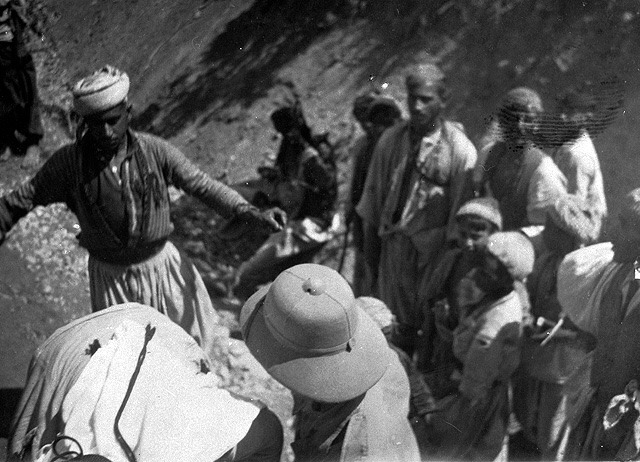
One student did not believe me when I told her there used to be a Jewish community in Iraq. Being of Iraqi origin, she said she never heard of Jews who came from her homeland. I pushed her: I told her to ask her grandparents if they knew of any Jews growing up in Baghdad. Almost as if she was determined to prove me wrong, she told me she would ask both her grandparents later that night.
When she came back, it was as if she was in disbelief at the words she was speaking. “My grandfather told me his best friend while growing up was Jewish and my grandmother said that her classroom had many Jewish students who were also her friends. They both seemed sad while telling me. They said they miss them very much, and the way Iraq was — welcoming to all people.”
As this student told her story, the whole class listened very intently, taking in her words. I wondered if any of their grandparents had stories that they carry but never reveal, still too heartbroken to remember a time when diversity seemed more acceptable.





 Rush's tumblr archive