for the last……..i don’t know, 5 or so years, my m.o. regarding internet bisexual disourse has largely been to ignore it and encourage other bi people to do the same. it made sense to me because as far as i could see it was an issue that exclusively existed on this site. which isn’t to say i didn’t think it was harmful – i hated myself for years as a direct result of the things other lgbt people said about bisexual women on here – but i thought the harm could largely be avoided by blocking the few loudmouths who were trying to start shit and hanging with people who weren’t evil.
i no longer feel that way.
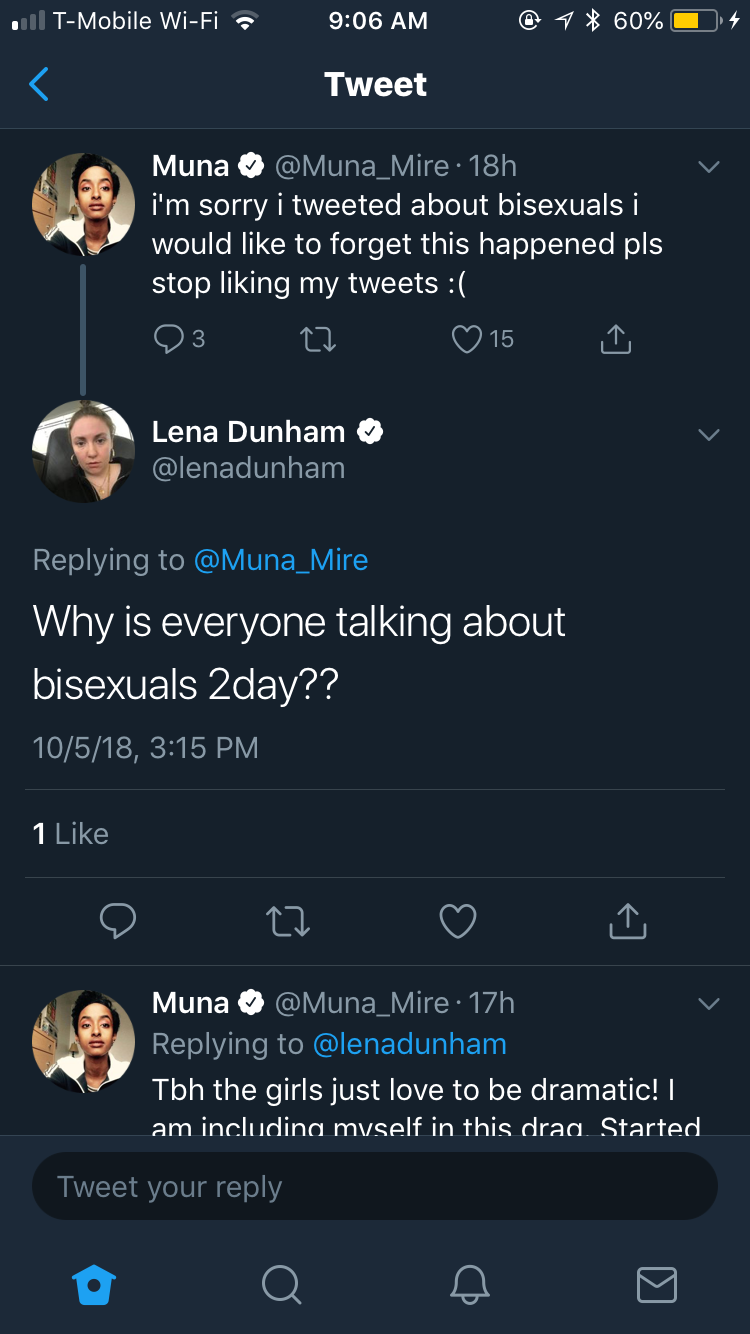
i no longer feel that way because, as of yesterday, you absolute fucking buffoons have ran your mouth so far that your fire new radical materialist feminist discourse so hot even fellow lgbts cant handle????????? has reached lena fucking dunham
do you want to know WHY your radical materialist feminist discourse reached lena dunham?????
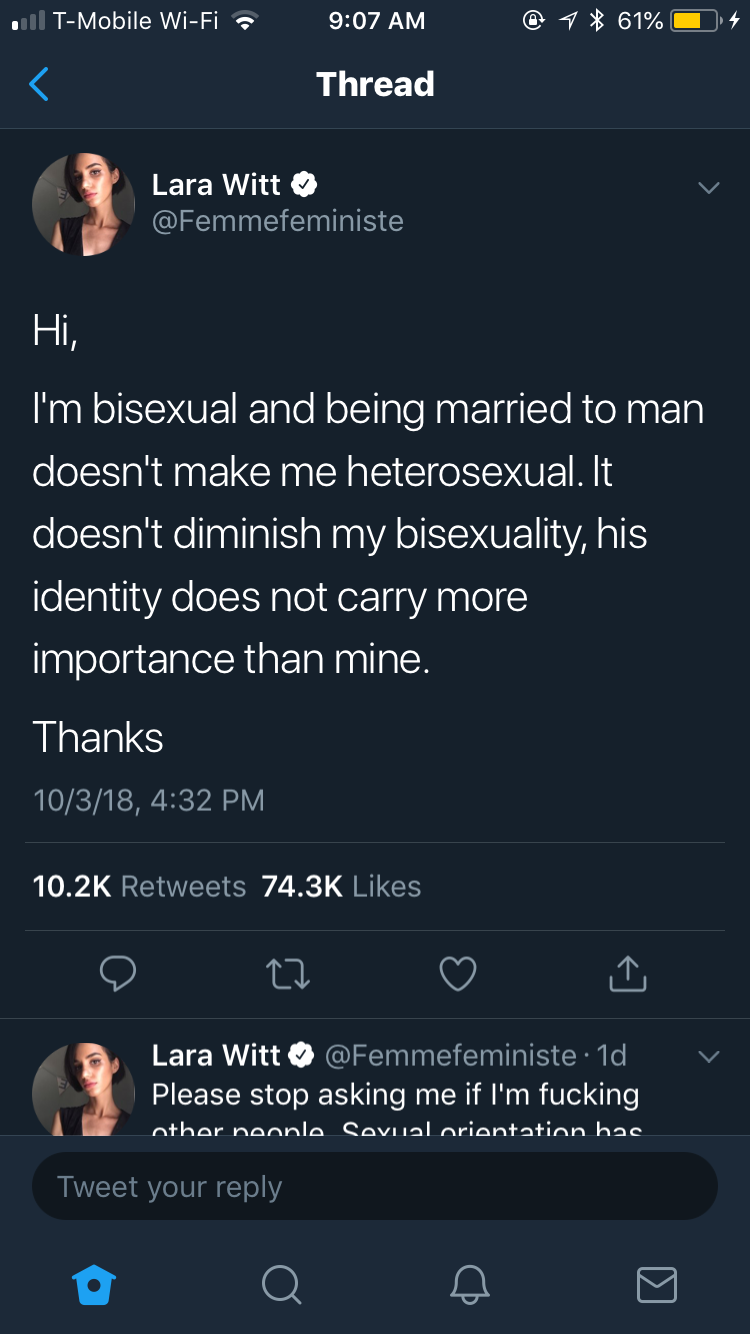
because a bisexual journalist made this simple ass tweet
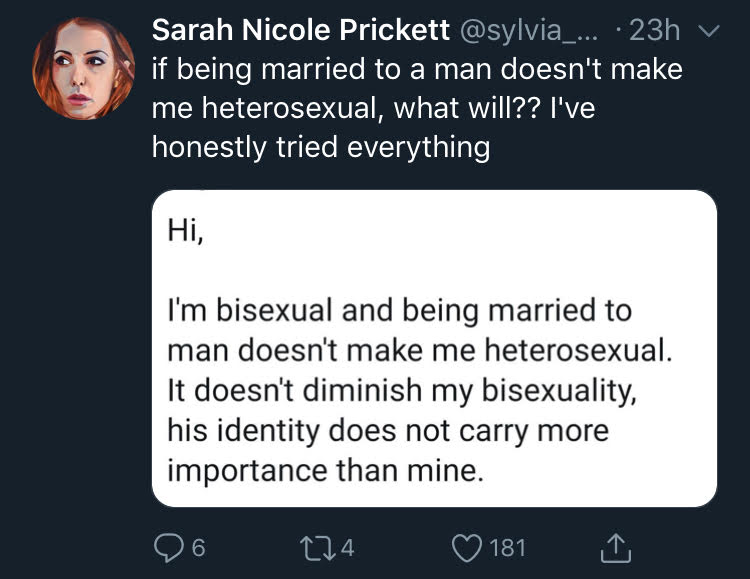
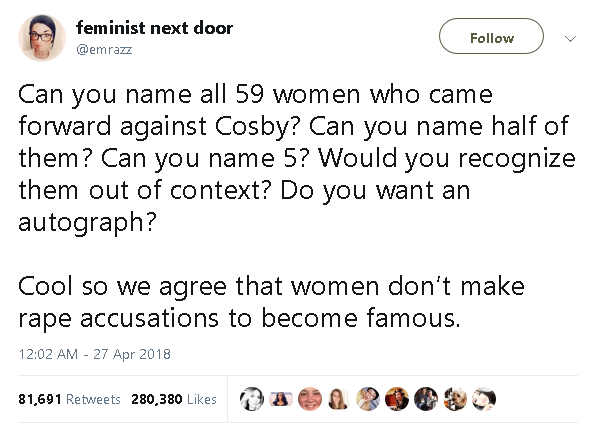
and in response, some straight white woman decided to tweet this
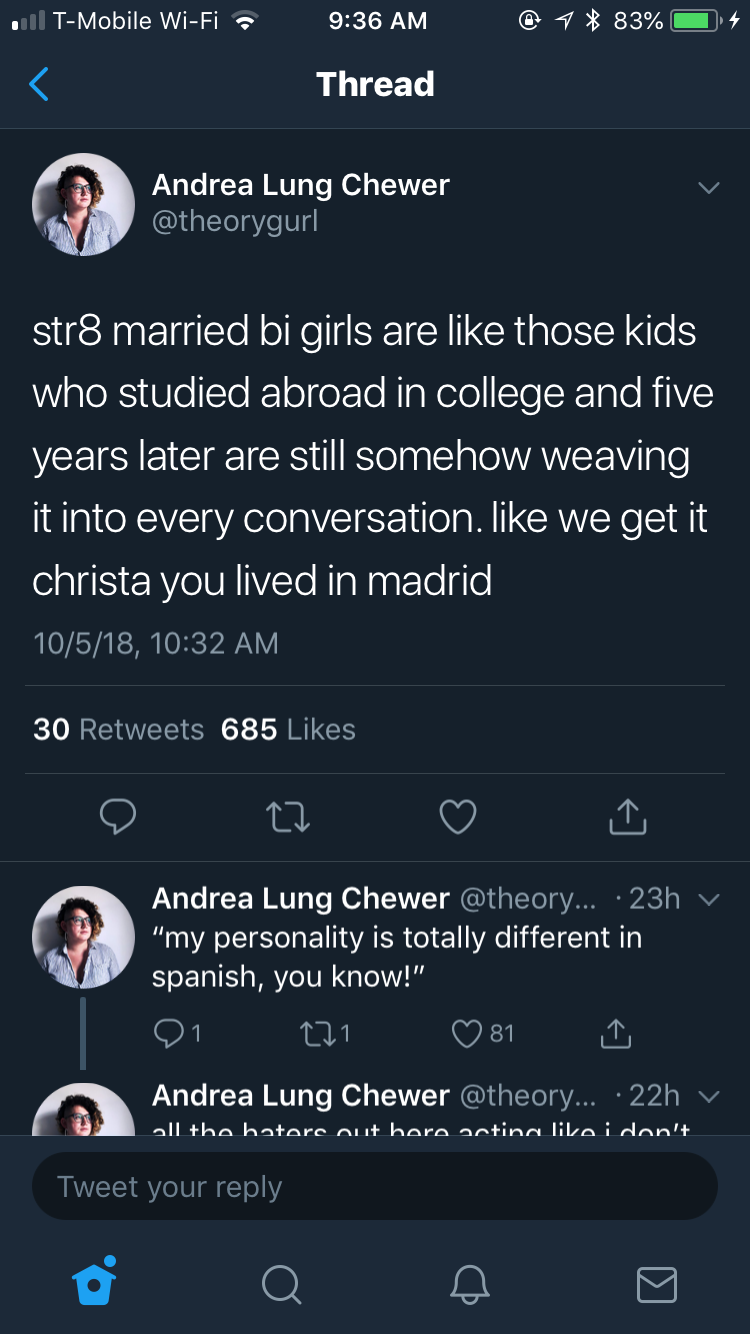
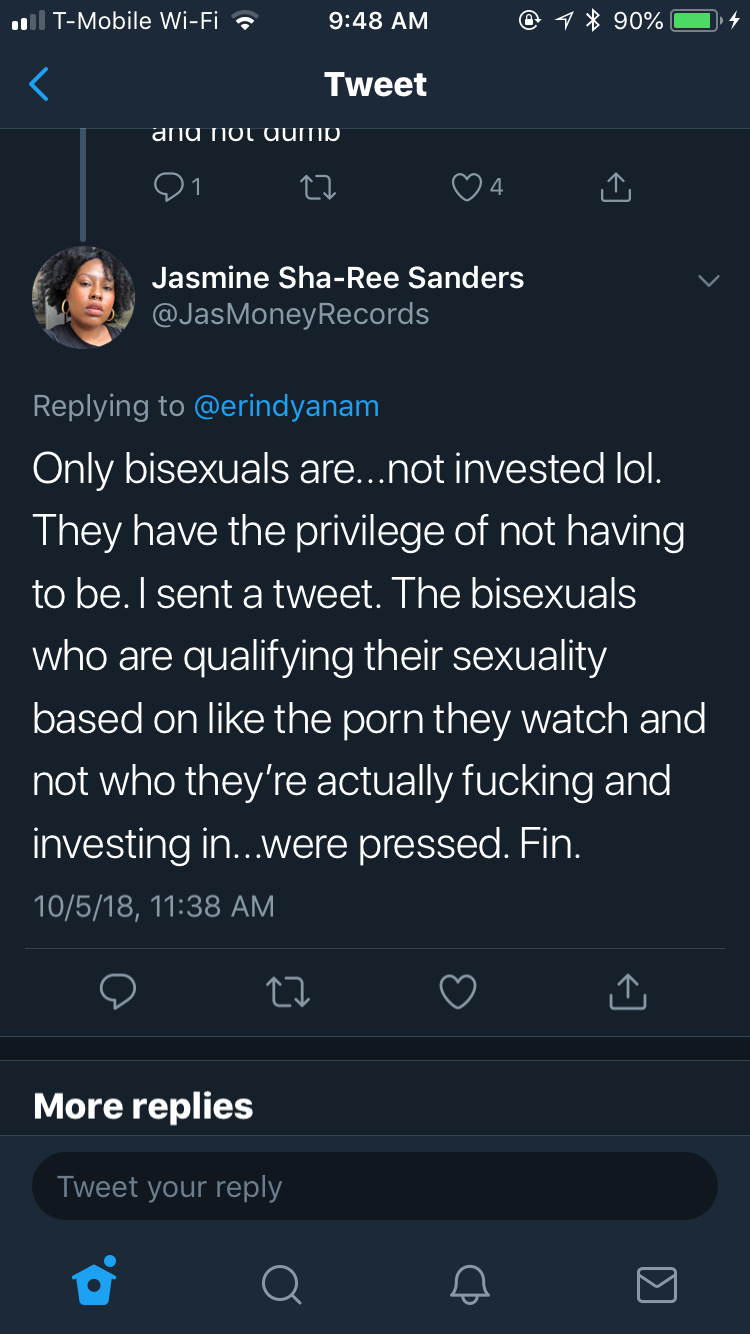
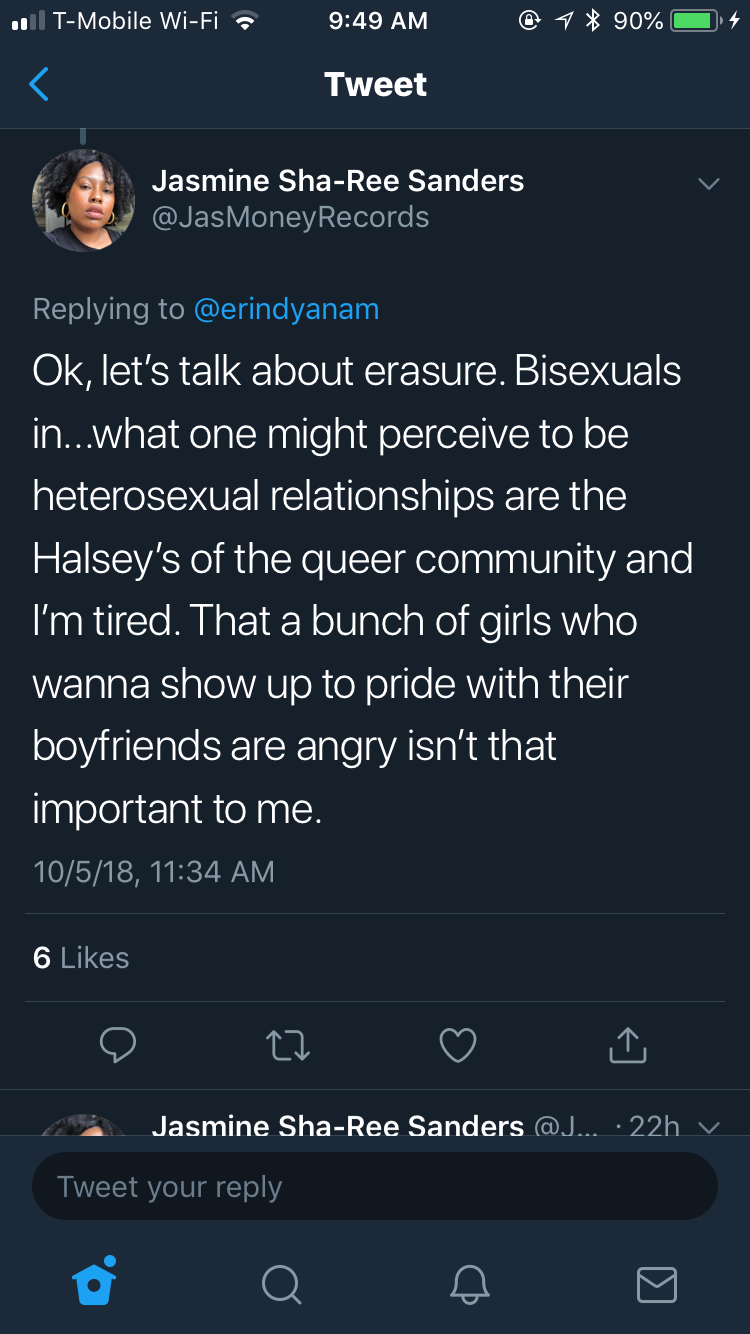
which would have just stayed straight nonsense if an extremely smart and clever white lesbian writer friend of hers hadn’t decided to join in with a searing hot take based on a radical perspective towards gender that could only have been achieved with her clearly useful phd in queer literature
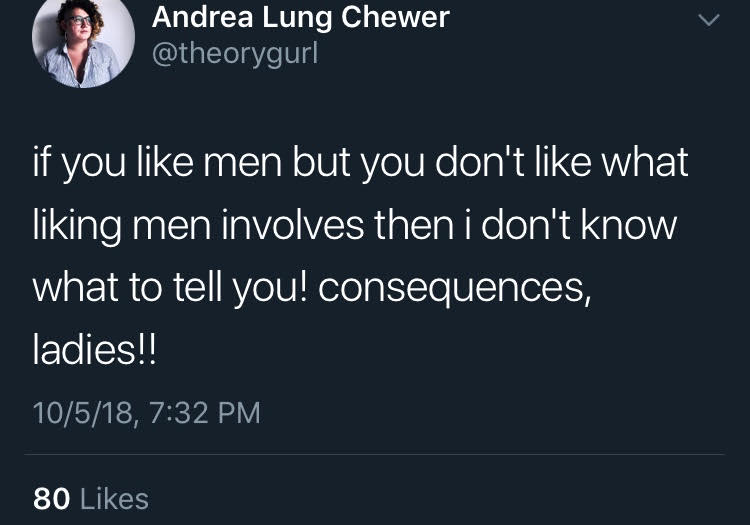
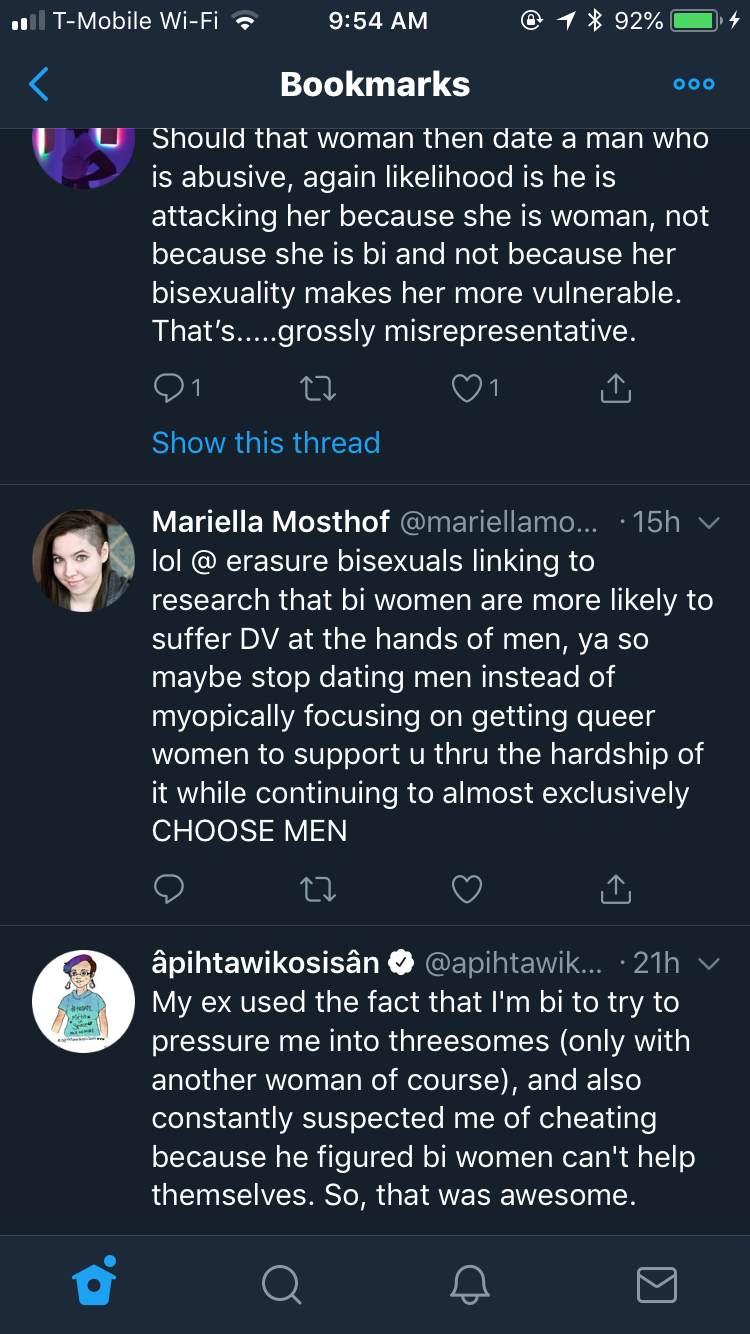
which would have just stayed mildly irritating if she and the rest of her friends hadn’t proceeded to defend themselves by arguing that bi women deserve rape and abuse actually
which would have only been horrifyingly offensive if all of these people weren’t 1.) people who make money writing about lgbt shit that 2.) were tweeting from their work accounts where 3.) they have enough reach to be followed by actually influential people such as comrade lena dunham
so seeing as the “close your eyes and maybe itll go away” method has CLEARLY failed, i am genuinely pleased to announce my new tactic. its called
Can I also just draw out here that their argument is LITERALLY that “women who sleep with men deserve what happens to them.”
Like.
This kind of person is, straight (haha) up, the kind of person who is only here for “I want mine”. If they’d been born a straight guy they’d be the worst kind of bros.
This is a thing that happens: I know PLENTY of straight white women whose grasp of feminism is limited strictly to “this affects me, so it’s important”. And of every other stripe of identity.
But never mistake it for anything than what it is.
JAMES GUNN FIRED FROM ‘GUARDIANS OF THE GALAXY VOL 3′!
James Gunn has been removed as director of ‘Guardians of the Galaxy Vol 3′ following controversy surrounding a series of offensive “jokes” that surfaced on twitter. No other information has been revealed!
Hey so it’s worth noting that the person leading this charge is an alt right author and actual honest to god proponent of rape and that James gunn apologized years ago and that all of these horrible very bad ‘jokes’ (since I guess we’re using quotes now) are at least seven years old.
I’m all for consequences for actions. But why are Scarjo or Renner still employed? And Why do people who actually do bad things get less flack than people who have demonstrated growth and change and are less disgusting than they used to be?
Why was a man who thinks rape is good louder than someone who knows he was being a dick when he joked about horrible things?
This is who got James Gunn fired. Just so yall know what the FUCK the world looks like today.
I think Shades figured out Tilda’s parentage the night he met her. That’s probably why he never asked Mariah why she never told him. After they were introduced and Shades went downstairs with Che, he was staring hard at Tilda. It wasn’t jealousy. I think he was trying to figure out why Mariah never told him. And then he probably realized that Tilda looked a lot like Uncle Pete.
He’s very observant and good and putting two and two together.
I don’t think he did.
(I really hope he didn’t.) All that stuff happened before he knew anything about anything and it doesn’t seem to be common knowledge in the community/streets. If he did, I’d imagine he’d have been way more cautious with and sensitive to Mariah. I feel like he would have then understood her mistrust of and failure to fully love him, why she was drinking so much. I think he would have stopped romanticizing the night she killed Cornell in, unbeknownst to him, a straight up PSTD episode.
And frankly, if he knew and still went on to choke her out and call her a crazy bitch, then throw the whole Shades away.
100% agreed, no way did Shades knew about anything related to Mariah’s rape. He came in at the tail-end of her murder of Cornell, and likely assumed that “I didn’t want it!” was in reference to his criminal behavior on her behalf. That was, after all, why he was planning to kill Cornell.
It’s very obvious that Ma Mabel kept that secret close in the family. Cornell must’ve known (and I will never get the whole “he’s so sympathetic!” fan reaction when his final words were slut-shaming a rape victim), Pete and Mabel knew, but otherwise? The Johnsons most likely thought that Tilda was regular born out of wedlock, Shades would’ve been about 8 or 9 when this happened and utterly clueless, and Tilda didn’t look that much like Pete; in the lie that she believed, she assumed that she took after her mother rather than her lighter-skinned “dad.”
I’m pretty sure Ridenhour was the only outsider that Mariah confided in because as her first boyfriend and amicable ex she trusted him at the time. Nobody else knew. Shades’ concerns about Tilda came more from an unknown player coming into the business as well as how Mariah’s behavior changed once Tilda came around. Could Tilda, as a new age doctor, really be trusted with their secrets? (no) Would trying to reconnect with her distract Mariah from running the business properly? (yes) Was trying to reconnect with Tilda making Mariah distance herself from him to be more “presentable” to her daughter? (yes) All of that is more than enough to explain Shades’ behavior towards Tilda.
and if you can, go and see The Death and Life of Marsha P Johnson, which includes this footage as part of a fuller segment on Sylvia Rivera’s life right up until her death. what an amazing person who the world was not ready for.
(Transcription follows🙂 Sylvia Rivera: I may be—
Crowd: [booing]
Sylvia Rivera: Y’all better quiet down. I’ve been trying to get up here all day for your gay brothers and your gay sisters in jail that write me every motherfucking week and ask for your help and you all don’t do a goddamn thing for them.
Have you ever been beaten up and raped and jailed? Now think about it. They’ve been beaten up and raped after they’ve had to spend much of their money in jail to get their [inaudible], and try to get their sex changes. The women have tried to fight for their sex changes or to become women. On the women’s liberation and they write ‘STAR,’ not to the women’s groups, they do not write women, they do not write men, they write ‘STAR’ because we’re trying to do something for them.
I have been to jail. I have been raped. And beaten. Many times! By men, heterosexual men that do not belong in the homosexual shelter. But, do you do anything for me? No. You tell me to go and hide my tail between my legs. I will not put up with this shit. I have been beaten. I have had my nose broken. I have been thrown in jail. I have lost my job. I have lost my apartment for gay liberation and you all treat me this way? What the fuck’s wrong with you all? Think about that!
I do not believe in a revolution, but you all do. I believe in the gay power. I believe in us getting our rights, or else I would not be out there fighting for our rights. That’s all I wanted to say to you people. If you all want to know about the people in jail and do not forget Bambi L’amour, and Dora Mark, Kenny Metzner, and other gay people in jail, come and see the people at Star House on Twelfth Street on 640 East Twelfth Street between B and C apartment 14.
The people are trying to do something for all of us, and not men and women that belong to a white middle class white club. And that’s what you all belong to!
REVOLUTION NOW! Gimme a ‘G’! Gimme an ‘A’! Gimme a ‘Y’! Gimme a ‘P’! Gimme an ‘O’! Gimme a ‘W’! Gimme an ‘E! Gimme an ‘R’! [crying] Gay power! Louder! GAY POWER!
There’s some really important commentary on this event by several trans women on the previous upload of the video. I’m going to quote it here so it’s not lost; unfortunately the original commenters have deleted their blogs or gone private so I can’t provide full attribution.
lilacbootlaces said:
[[Trigger warning: suicide]]
Sylvia went home that night and attempted suicide.
Marsha Johnson came home and found her in time to save her life.
Sylvia left the movement after that day and didn’t come back for twenty years.
this is incredible, she is incredible, I highly recommend watching it
but I think the addendum re: the effect of this day on sylvia is really important
so often we valorise decontextualised moments of tough, articulate resistance and rage
and
the suffering of the people who embodied them is not acknowledged, it’s
uncomfortable, it’s not inspiring, we want them to stay tough and cool
and stylish forever
which is particularly terrible when I think about how sylvia felt like that because of women like me — women who are now watching this video and feeling inspired and impressed
and maybe a bit pleased with ourselves for finally having watched a
speech by the famous and really cool to name-drop sylvia rivera
girl-assassin said:
rebloggin for the true as fuck commentary (bolding mine)
n
like, on one hand this moment is decontextualized as fuck, but on the
other hand a lot of ppl try to hyper-contextualize it to make it
“history” and a very specific historical moment, so we (cis women) can
be like “oh so sad that’s how it was in the 1970s, radfems were so
awful, but it was only the whole second-wave scene that was the problem,
glad that’s over.”
Like have we forgotten the fact that Sylvia
only died in 2002? And she died young, if she were still alive she
wouldn’t even be 65 yet. I know hella older ppl in NYC who knew her
personally, and hella “leaders” of the NYC queer scene pulled horrific
shit on her constantly in the 80s, 90s, and 2000s, like literally
until the day she died (ppl from Empire State Pride agenda literally
went to St. Vincents to beef with her on her death bed) Where are the
video tapes/memorializing of that shit?
N now the Manhattan LGBT
center on 13th st has a room dedicated to her memory, despite the fact
that very center permanently banned her in 1995 for daring to suggest
they should let homeless QTPOC sleep there in sub-zero weather.
N
now there’s a whole homeless trans youth shelter on 36th st named after
her, Sylvia’s Place, that kicked my TWOC friend out on the streets for
testing positive for marijuana; failing to recognize how fucked up that
is in a shelter named after a woman who struggled with addiction all her
life, and was very vocal about the relationship between drug use and
the stress of living under constant threats of violence.
N from
the late 90s onward rich gays and lesbians openly fought against Sylvia
to try to shut down 24/7 access to the piers that she n hella other
QTPOC cruised and lived on bc they were bringing down the property
values of their multi-million west village apartments.
N like 90%
of the individual people who perpetuated fucked up violence against
Sylvia are still alive and high-profile leaders in the NYC LGBT
“community” today.
So like yes, good, remember the oppressive
weight of our history of transmisogyny…but also remember that this shit
specifically ain’t even history, it’s the current reality of the NYC
queer/trans hierarchy today—like not even figuratively, literally the same people
who pulled shit like this on Sylvia are still alive n well n all over
NYC cutting the ribbons to the newest Sylvia Rivera memorial n
eulogizing her like they never tried to fucking kill her themselves.
Sorry for constantly reblogging this but here’s some more info?
I mean, I didn’t really mind because it is true. I don’t mind Dolores being an extremist or a villain in the long term, as long as she is at least somewhat of a sympathetic villain. And if you can’t watch this show and see where Dolores is coming from regardless of whether or not you agree with her… (I mean, going back to the beginning…) that’s not a show problem, that’s a you problem. I’ve said it over and over–and Dolores spelled it out in the last episode. Girl has been raped and murdered thousands of times. She’s watched people she loved die thousands of times. Sometimes, you just don’t come back from that and you want to burn it all down and start fresh.
Also, Akecheta literally said that it’s easy to misunderstand intentions in this world so like…………… I’m still not 100% set on what I think they’re doing with Dolores long term (AND Maeve).
The same damn weirdos who be supporting some of the most vile shit that fandoms have to offer and telling people to not be so sensitive be the same exact ones who be writing a Harvard style essays about how toxic fandoms are because they got called a loser.
You can’t have it both ways.
It’s either fandoms should run rampant with uncalled out incest, pedophilia, rape, racism, misogyny, homophobia, transphobia, etc because “Don’t Like, Don’t Look! Don’t be so sensitive! :)” and y’all get made fun of for it OR all that disgusting shit is addressed because its clear y’all don’t have the spine to take being called out.
So what’s it gonna be? Be a decent human being with some semblance of morals or be a weirdo that has no friends?
Womp womp, there the fax.
This is the most tone-deaf, self-righteous post I’ve seen in fandom drama in a long-ass time.
I like the reference to Kate Manne’s Down Girl: The Logic of Misogyny:
But “Virtuous Violence: Hurting and Killing to Create, Sustain, End, and Honor Social Relationships” (Cambridge), by the anthropologist Alan Fiske and the psychologist Tage Rai, argues that these standard accounts often have it backward. In many instances, violence is neither a cold-blooded solution to a problem nor a failure of inhibition; most of all, it doesn’t entail a blindness to moral considerations. On the contrary, morality is often a motivating force: “People are impelled to violence when they feel that to regulate certain social relationships, imposing suffering or death is necessary, natural, legitimate, desirable, condoned, admired, and ethically gratifying.” Obvious examples include suicide bombings, honor killings, and the torture of prisoners during war, but Fiske and Rai extend the list to gang fights and violence toward intimate partners. For Fiske and Rai, actions like these often reflect the desire to do the right thing, to exact just vengeance, or to teach someone a lesson. There’s a profound continuity between such acts and the punishments that—in the name of requital, deterrence, or discipline—the criminal-justice system lawfully imposes. Moral violence, whether reflected in legal sanctions, the killing of enemy soldiers in war, or punishing someone for an ethical transgression, is motivated by the recognition that its victim is a moral agent, someone fully human.
In the fiercely argued and timely study “Down Girl: The Logic of Misogyny” (Oxford), the philosopher Kate Manne makes a consonant argument about sexual violence. “The idea of rapists as monsters exonerates by caricature,” she writes, urging us to recognize “the banality of misogyny,” the disturbing possibility that “people may know full well that those they treat in brutally degrading and inhuman ways are fellow human beings, underneath a more or less thin veneer of false consciousness.”
Manne is arguing against a weighty and well-established school of thought. Catharine A. MacKinnon has posed the question: “When will women be human?” Rae Langton has explored the idea of sexual solipsism, a doubt that women’s minds exist. And countless theorists talk about “objectification,” the tendency to deny women’s autonomy and subjecthood, and to scant their experiences. Like Fiske and Rai, Manne sees a larger truth in the opposite tendency. In misogyny, she argues, “often, it’s not a sense of women’s humanity that is lacking. Her humanity is precisely the problem.”
Men, she proposes, have come to expect certain things from women—attention, admiration, sympathy, solace, and, of course, sex and love. Misogyny is the mind-set that polices and enforces these goals; it’s the “law enforcement branch” of the patriarchy. The most obvious example of this attitude is the punishing of “bad women,” where being bad means failing to give men what they want. But misogyny also involves rewarding women who do conform, and sympathizing with men (Manne calls this “himpathy”) who have done awful things to women.
As a case study of misogyny, Manne considers strangulation—almost always performed by men on female intimate partners—which she describes as “a demonstration of authority and domination,” a form of torture that often leaves no marks. Other forms of expressive violence are very much intended to leave marks, notably “vitriolage,” or acid attacks, directed against girls and women in Bangladesh and elsewhere. Catalysts for such attacks include refusal of marriage, sex, and romance. Then, there are so-called family annihilators, almost always men, who kill their families and, typically, themselves. Often, the motivation is shame, but sometimes hatred is a factor as well; and sometimes the mother of murdered children is left alive, perhaps notified by phone or a letter afterward—See what you’ve made me do. The victim is also the audience; her imagined response figures large in the perpetrator’s imagination.
Manne delves into the case of Elliot Rodger, who, in 2014, went on a killing spree, targeting people at random, after he was denied entry to a sorority house at the University of California, Santa Barbara. He slew six people and injured fourteen more before killing himself. In a videotape, Rodger, who was twenty-two, explained that women “gave their affection and sex and love to other men but never to me.” And then, talking to these women, he said, “I will punish you all for it … . I’ll take great pleasure in slaughtering all of you.”
Manne makes clear that Rodger wasn’t objectifying women; he was simply enraged that their capacity for love and romance didn’t extend to him. Manne’s analysis can be seen as an exploration of an observation made by Margaret Atwood—that men are afraid that women will laugh at them, and women are afraid that men will kill them. For Manne, such violent episodes are merely an extreme manifestation of everyday misogyny, and she extends her analysis to catcalling, attitudes toward abortion, and the predations of Donald Trump.


 Rush's tumblr archive