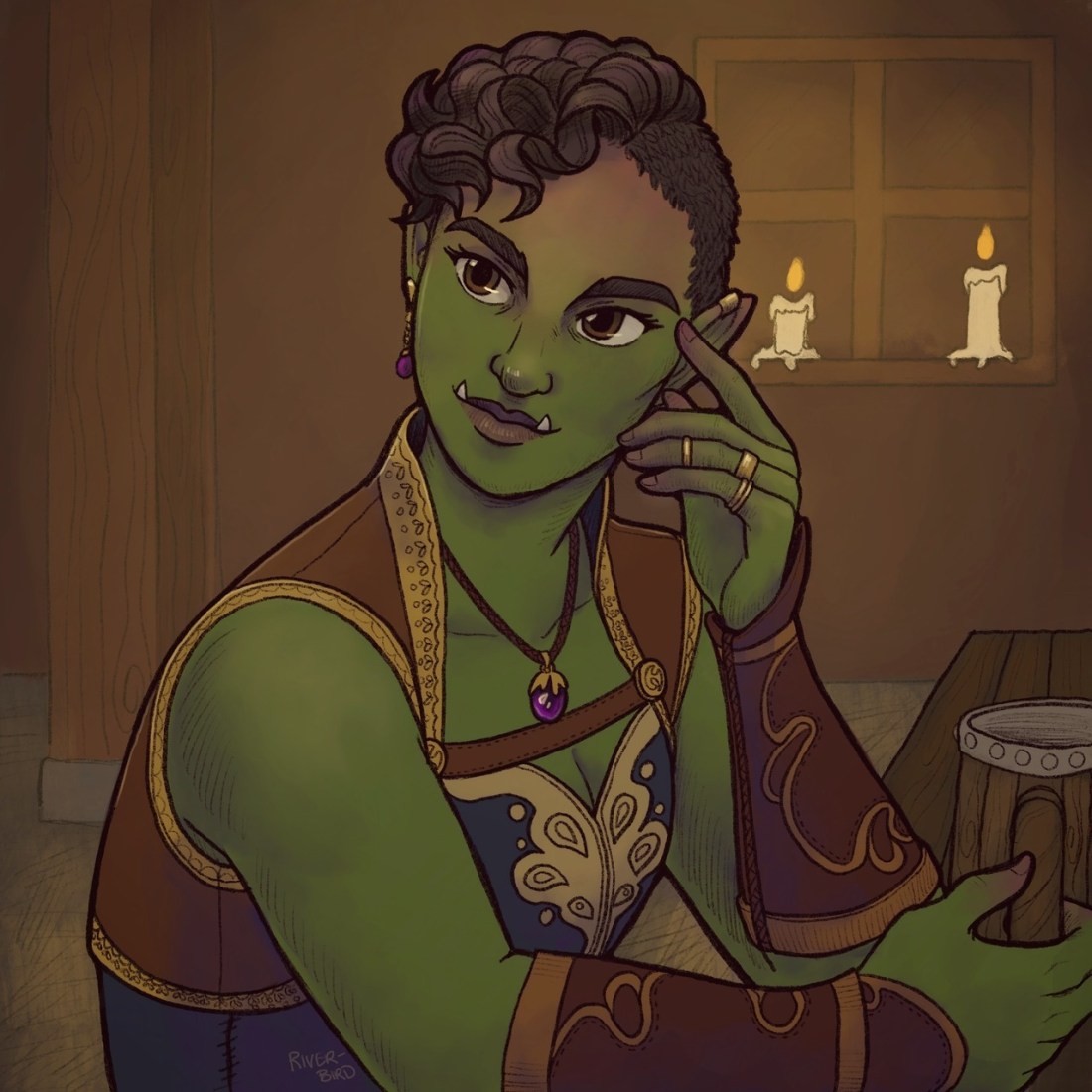
A rogue walks into a room searching for her mark.
A new npc for my campaign.
on the topic of rewriting racist d&d narratives
it takes work, yes!
it’s worth it. for both you and your players, but especially for new players who can see the game in different ways than you
examples I’ve written that you should feel free to use:
-orcs: rather than give in to the weird “tribal savages who fight all the time,” consider connecting orcs and their inate strength/constitution to the earth. in my most recent campaign setting, orcs are descended from a human champion who bested an earth primordial; the primordial, impressed with their strength, blessed them and their descendents with powerful tusks and a greater constitution.
-drow: instead of the entire drow narrative being “they’re dark skinned and bad because they betrayed the fair skinned elves and their gods,” consider playing up their connection to spiders. perhaps they worshiped a spider God who gave them the ability to blend into their darkened surroundings. if you’re married to their current aesthetic appearance, take care to present multiple drow societies that have different outlooks; not a homogenous race of black skinned slavers. consider pigmentless drow, who’ve lost all skin color because they never see the light of day. drow who use echolocation? distancing your drow from the bad connotations carried by the current zeitgeist is a useful endeavor
-include. colored. elves. in. your. game
-drop the ‘tribal’ aesthetic and the connotations that goblins and other monstrous races have. it’s lazy
-focus less on race and more on societies; a society can be evil or good, but a race cannot
-consider that fantasy races have no reason to conform to any gendered structures (especially our current human binary). dwarvish societies who express their varied and fluid genders through beard braiding. elvish societies who reproduce asexually. don’t limit yourself to what you can relate to from a 21st century human perspective
it takes a bit of elbow grease to decolonize your d&d, and the process is never done, but in my own experience, it’s only ever lead to more innovative and engaging experiences!
three main parts of d&d culture are
1. *drops to 0hp* “I’m dead.” “You’re not dead yet”
2. rolling a bad perception roll and your dm is just like “you don’t have a fucking clue where you are. a room maybe?”
3. when the dm is narrating a scene for another character and your character isn’t even there so when you make a smartass comment about what’s happening the dm shouts “You’re not here”
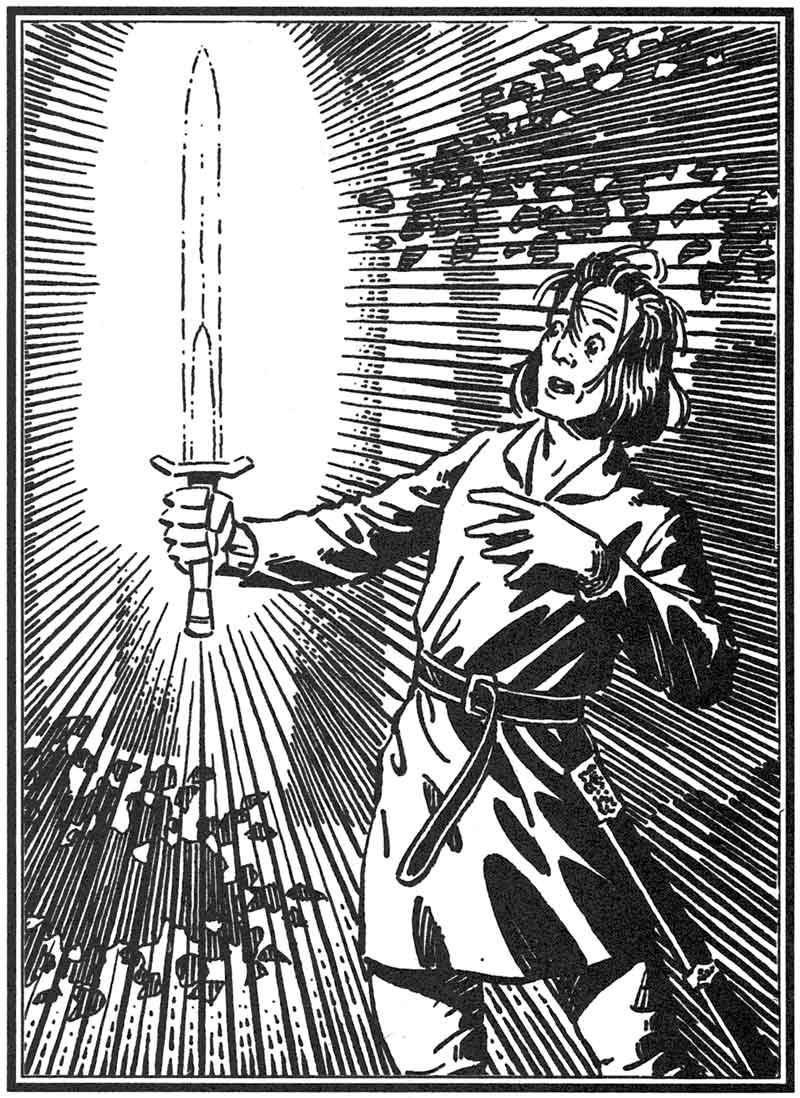
DM tip: Give a low-level PC a powerful magic item that levels up with them. At first the character is aware of only some of its power, but they can unlock more abilities after gaining knowledge and experience and forming a deeper bond with it. (Denis Loubet, Robin Hood the Roleplaying Campaign, Iron Crown Enterprises, 1987)
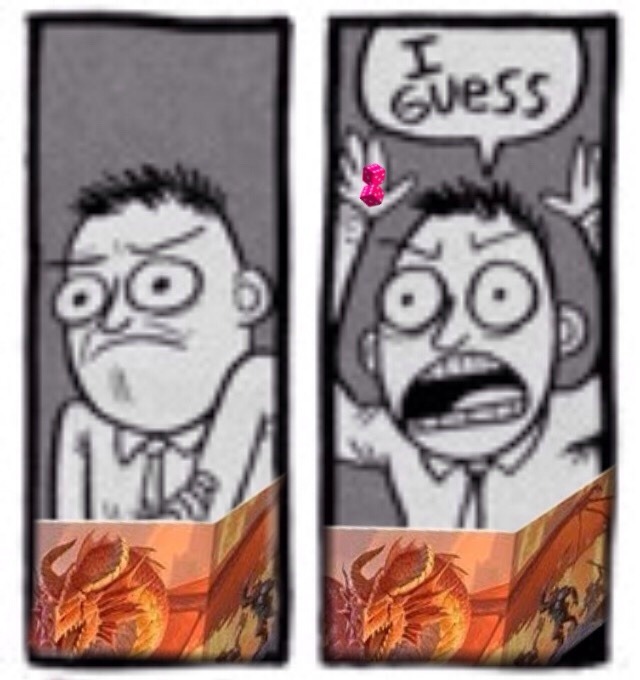
the notes on this are almost entirely people tagging their DM who they’ve made throw their hands up in anguish
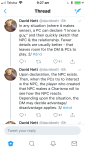
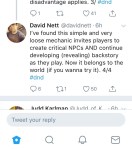
Just saw this on Twitter. An awesome idea for players who are stuck and for DMs to foster more involvement from your party in the world.
@probablynpcrpgideas
Tag yourself:
Dad DMs: check the rulebook every five seconds, name npcs after terrible puns, make sound effects during battles
Mum DMs: bring loads of snacks to every game, ‘are you sure you want to do that? Well, are you really sure?’, puts you on a time-out for killing an npc
Cool Aunt DMs: ‘oh yeah that’s totally not how the rules say that works but go ahead cos it’s hilarious’
we’re all playing dnd because we’re gay and we wanna work through our unresolved trauma but like. in a cool high-fantasy way



 Rush's tumblr archive