Dear Archy,
First of all I really don’t know how to express my obsession with this blog.
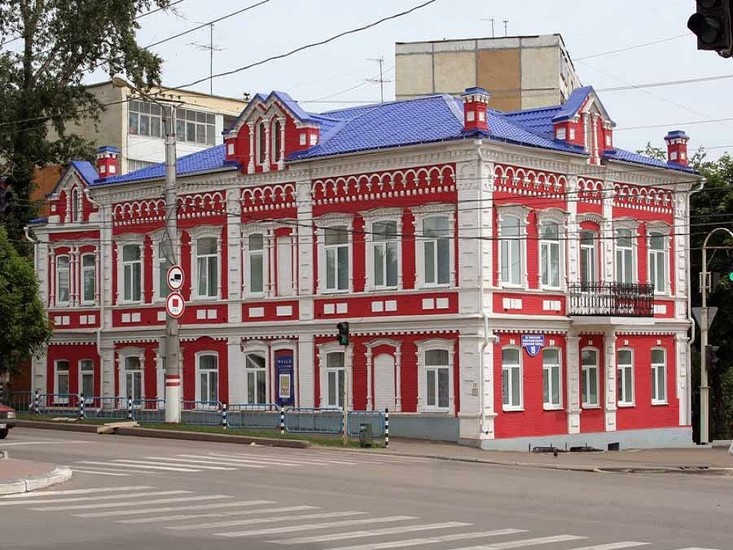
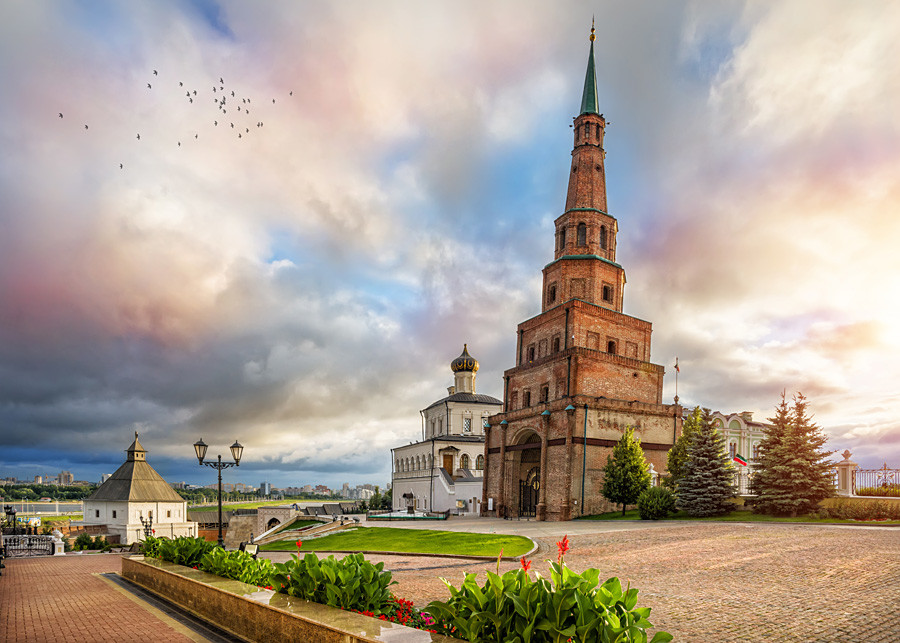
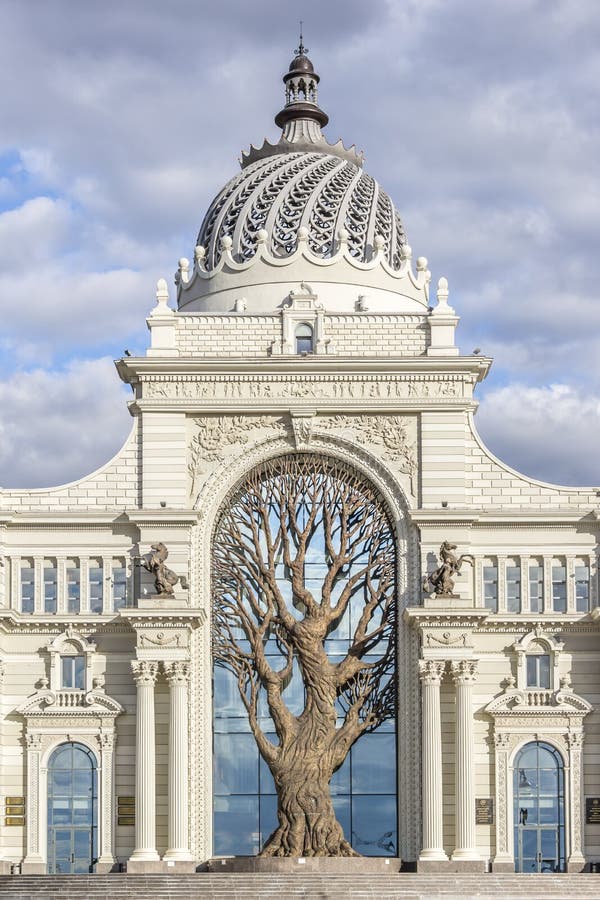
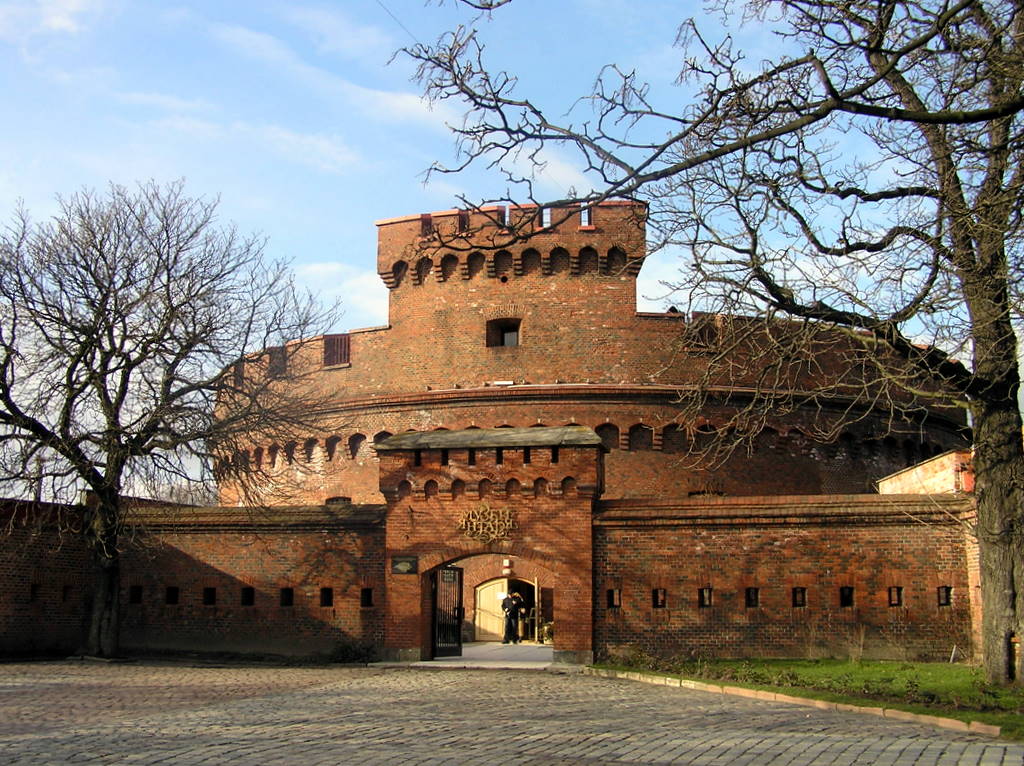
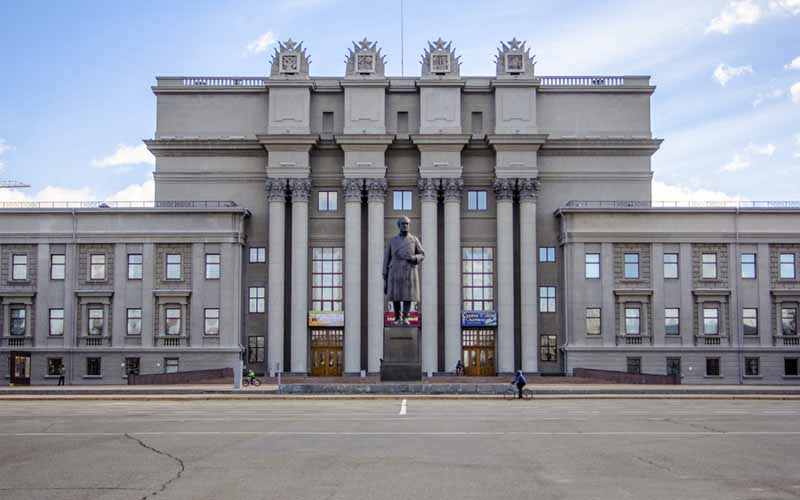
As the Fifa World Cup is in Russia this year I am planning on going there next week. I would like to request you to share some of your most favorite architectures of Russia (both traditional and contemporary) if possible. I am very much intrigued to see as much as I can during my stay. Thanks once again!
Thanks!
Here is a small selection of architectural highlights in the cities where the games of the Fifa World Cup will be played. There is much more to discover in each city but I hope you get to visit some of these:
3/12/17, 10:30 PM CET Updated 3/15/17, 2:21 PM CET
KIEV, Ukraine — When “little green men” invaded Crimea in the spring of 2014, Russian media went into overdrive, smearing Ukraine’s Euro-revolution as a “fascist coup d’état.”
A group of professors and students struck back and unwittingly made history that spring when they launched StopFake.org, the first site to directly tackle and refute Russian propaganda. Now that the rest of the world has woken up to the Kremlin’s disinformation tactics, the journalism school crew behind StopFake have emerged as the “grand wizards” of the fake-news-busting world.
“There was a growing avalanche of propaganda from Russia seeking to reframe the narrative in the Kremlin’s favor, and we urgently needed to counterbalance that,” says Yevhen Fedchenko, the dean of Kiev Mohyla University’s journalism faculty and one of the founders of StopFake.
The site quickly gained a cult following by exposing false facts in anti-Ukraine Russian news reports. An aggrieved mother whose child was reportedly “crucified” by Ukrainian troops was “outed” as a popular Russian television actress in an article that was shared 11,000 times and later referenced in a press conference with Putin.
As a journalist covering Ukraine during the post-2014 barrage of Russian propaganda, I remember how the Kremlin’s fake news stories infected our most private moments and reframed the narrative.
But it was only after last year’s presidential election in the U.S. — when Russian fake news and cyberattacks were blamed for swaying the election in Donald Trump’s favor — that the site burst on to the global stage.
Almost overnight, the founders of StopFake went from provincial do-gooders to international media stars. Fedchenko and his colleagues were lauded at conferences and plied with offers of consulting work by nervous European governments. They now organize media workshops across the Continent, offering guidelines on recognizing and debunking Russian propaganda.
[…]
As the West scrambles to get a handle on the Kremlin’s propaganda tactics, Ukraine for once finds itself in a privileged position. Ukrainians lived through the Soviet Union, speak fluent Russian and can sift through Russian-language sites for clues about the inner workings of the Kremlin’s fakes news operations. They know the sites pumping out Kremlin disinformation and might even have met some of their editors in the past.
The site Ukraina.ru, for example — a Russian-language site from Moscow that peddles false anti-Ukraine stories — recently offered one of StopFake’s freelancers a full-time position.
“He turned down the job of course, even though the salary was very high,” says Fedchenko, who knows the editor-in-chief, a man who spent a few years in Kiev before the Maidan revolution. “We traced their offices to a building in Moscow that also houses other Kremlin-friendly sites like Sputnik and RIA Novosti.”
New urgency
As a journalist covering Ukraine during the post-2014 barrage of Russian propaganda, I remember how the Kremlin’s fake news stories infected our most private moments and reframed the narrative.
I recall an incredulous taxi driver telling me that a recent client from Moscow had insisted that the MH17 flight, which was downed over eastern Ukraine in July 2014, had been “stuffed with dead bodies.” He refused to pay the fare until the driver agreed with his version of events.
Fake reports alleged that the Ukrainian air force had targeted Russian President Vladimir Putin’s plane, which flew over the same region as MH17 one hour earlier. A journalist friend who was briefly detained in eastern Ukraine said the separatist soldiers had been incredulous the West could so openly support Kiev’s “fascist junta.”
Meanwhile, the Kremlin’s repeated assertions that there are no Russian troops or weapons involved in the conflict has created a convenient narrative for those who prefer to label it a “civil war” and not an act of Russian aggression.
Ukrainians are also intimately aware of the dangers of Russian propaganda, and the way it can infect the body politic with its dark messages.
Chopping the air feverishly with his hands, Fedchenko emphasizes that contemporary Russian propaganda had no inherent ideology and appealed to people’s basest instincts.
“Their messages are very fluid and seek to divide societies against themselves,” he says. “The Kremlin is against all international organizations like the NATO or the EU, and prefers that each country is forced to fend for itself.”
StopFake’s dire warnings about Russian propaganda and its nefarious designs have taken on new urgency in the context of upcoming presidential elections in both Germany and France, where there has been much talk about Kremlin disinformation campaigns against anti-Russian candidates.
Fedchenko explains that the case of the German-Russian teenager, Lisa — whose supposed rape by Muslim immigrants sparked mass protests by Germany’s millions-strong Russian community last year — was a classic example of Russian propaganda.
“They fabricated a rape to inflame passions among Russian speakers in Germany and discredit Merkel,” he says.
During a recent presidential campaign in Moldova, Russians also spread fake reports labeling the pro-European candidate a lesbian and accusing her of supporting “mass Muslim immigration.”
The pro-Kremlin candidate won the election.
Ukraine can’t turn back time. But for the rest of the Western world, it might not yet be too late. The government in Kiev has many Russian media outlets to counter fake news. And indeed, Fedchenko’s biggest regret is that “Ukraine hadn’t switched off Russian television 20 years ago.”
His eyes briefly become misty as he imagines a country completely free from the taint of Russian propaganda. If that had been the case, he says with renewed conviction, “we’d never have had the war in the Donbass to begin with.”
St Petersburg’s Internet Research Agency – AKA “The Troll Factory” –
is in the news since Robert Mueller indicted 13 of its employees, but it
first came to public attention in 2013, when investigative reporters
working for the independent newspaper Novaya Gazeta revealed that the
agency was working to manipulate Russian public opinion in favor of
Putin and the Kremlin and against opposition politicians by flooding
Russian online discussions with thousands of “patriotic” posts made
under a welter of pseudonyms.
The story of Novaya Gazeta’s scoop – and the followup revelations in
Russia’s precarious independent press – is quite a tale, where bravery,
smarts, and dogged determination uncovers a plot by a seemingly
impregnable state to shore up its power.
It started with a whistleblower, Natalya Lvova, who posted the story of
her employment at the Troll Factory to the Russian social media platform
VK. Reading the post prompted reporters to pose as job applicants at
the Troll Factory, going undercover to document its operations in
detail.
In addition to revealing the workings of the Factory – how assignments
were given out and evaluated – the reporters also revealed the targets
of the Factory: rubbishing opposition politicians, whipping up patriotic
sentiment around the Moscow G20, attacking America and its media, and
attacking critics of the Kremlin who posted to message boards. As the
Factory grew in stature and importance, it moved into new digs, and
hired staff who could post in English and German, and the Factory
started to target American media with outrage posts about mass
shootings, Obamacare, NSA mass surveillance and police shootings and
violence.
They also stepped up their propaganda wars in Russia, trying to spin the
2015 assassination of opposition leader Boris Nemtsov as a false-flag
operation, using a sock-puppet army to advance the theory that Nemtsov
engineered his own shooting.
These ongoing revelations came thanks to other journalists who followed
the original investigators’ lead, getting jobs in the swelling ranks of
the Troll Factory to document its growth. Other journalists worked with
whistleblowers who left the Troll Factory disenchanted after
soul-deadening work.
Piece by piece, the Troll Factory came into focus. Its ownership was
traced back to Putin crony Yevgeny Prigozhin; this, coupled with the
Factory’s frequent contracts to directly promote the Kremlin and its
policies made it clear that it functioned as a government contractor, or
possibly even an arm of the Russian state.
It also became clear that for all the Factory’s foreign adventures, its
bread and butter is shaping Russian public opinion and neutralizing
opposition voices. The Russian style of misinformation
is “firehoses of falsehood” – as I wrote about Christopher Paul’s work
on Russian propaganda: “having huge numbers of channels at your
disposal: fake and real social media accounts, tactical leaks to
journalists, state media channels like RT, which are able to convey
narrative at higher volume than the counternarrative, which becomes
compelling just by dint of being everywhere (‘quantity does indeed have a
quality all its own’).”
In October 2017, Russian investigators did the data-analysis that outed
the Factory’s most prolific, high-value astroturf accounts, providing
the crucial starting point for efforts that have since identified the
clusters of Russian propaganda bots on social media.
Russia’s independent press operates under constant threat of state
intervention – anything from lawsuits to arrests to disappearances. The
Russian journalists who documented this critical weapon of the Russian
autocratic state are owed a debt of thanks by Russians and westerners
alike, for helping us understand how powerful, corrupt states are
shaping public opinion to preserve their privilege.
Considering that Russian journalists who expose too much often end up murdered by Putin’s security services, it’s important to raise awareness of what they do and support them.
What with draconian laws and website blocking, the pressure on independent media has grown steadily since Vladimir Putin’s return to the Kremlin in 2012. Leading independent news outlets have either been brought under control or throttled out of existence. As TV channels continue to inundate viewers with propaganda, the climate has become increasingly oppressive for those who try to maintain quality journalism or question the new patriotic and neo-conservative. More and more bloggers are receiving prisons sentences for their activity on online social networks. The leading human rights NGOs have been declared “foreign agents.” The oppressive climate at the national level encourages powerful provincial officials far from Moscow to crack down even harder on their media critics.
Do you think the Russian agents were briefed beforehand on what a shithole this website is, or did some poor bastard in Krasnoyarsk get blindsided by their first random anon demanding their opinion on whether or not sexbot yiffing is problematic or empowering
Some sad sack from a troll farm in Smolensk: All right listen up gang. Who can tell me what this means?
*points to a white board with the words ‘big yeet’ written on it, underlined and circled*


 Rush's tumblr archive