She gie’d her mammy a cake, she turnt intae a big bear, and her old yin tried tae dae her in. If that’s no pure mess, I don’t know wut is. Simples.
I’ll be honest, I got the first part of that, and the last part. But there is an entire sentence in the middle, that evidently is about her father trying to kill her mother, that sounds completely unintelligible to me. I assumed it was another language – potentially Gaelic but honestly, I’ve never heard that spoken before so I was taking a guess there.
I watched Brave and had absolutely no trouble understanding the entire movie so they’re definitely increasing the accent here for comedic value. But also it’s not just an accent – that second part of the first sentence isn’t understandable even transcribed.
I’m
a weird one though – I grew up in an asian country (not white), and
somehow despite multi-lingual parents and siblings (as is expected in
that asian country), my only and mother tongue is English.
It’s no Gaelic, it is however Scots 🙂
“Big Yin” is a common Glasgow term, and this is important, cause Billy Connolly who voiced her Da, is from Glasgow. It’s also the name was known by during his rise to fame, and is still affectionately known as “The Big Yin”.
It basically means “the big man” (note: a person does not need to be tall or large in stature to be called the big man, sometimes it can mean something else like “boss” or “strong personality”). So yea. Was a nice wee addition to her dialogue, though they’ve made her more Weegie for sure.
Are you saying “The Big Yin” could also translate into “Big Dick Energy”???
This is shite patter. The unintelligible accent patter whether it’s a heavy Indian accent, French accent, over the top German or Russian or whatever, it’s completely shite patter.
The BBC had a section asking Scottish people if they understood her accent. They literally were asking Scottish people if they understood Scots.
Get in the fucking sea.
BBC Scotland only did that because it’s heavily populated by people who were sent for elocution lessons to get rid of their accents by their parents, who were afflicted by the Scottish cringe.
The British establishment, as represented by BBC Scotland are at war with Scottish culture, over 300 years they’ve managed to severely curtail the use of Scots Gaelic, they already deride any who speaks Scots as unintelligent.
Here’s an anecdote from my childhood: I hail from Falkirk, born into a traditional working class family who speak predominantly broad Scots. When I started school my teacher told me to stop speaking like that, it’s slang, it’s not proper English I won’t speak to you or listen to you until you speak properly! This upset me, but of course I changed the way I spoke and I began to hate the way my parents and grandparents spoke. Fast forward three years, January 1994, and we’re handed out these sheets by our teacher that have lines of poetry, or so we’re told because I couldn’t make head nor tail of what was written on this sheet. She told us these were written by a very famous Scottish poet (I didn’t realise until this point we were actually Scottish, I thought we were British or English because everything, media, press was so British/English centred). She told us to learn these words and we would be expected to read these at a special school assembly. I was terrified. I’ve never been great with public speaking and I didn’t really fancy making a fool of myself in front of older pupils.
The night before the assembly, my Nan found me at the back of the sofa with this sheet, crying because I just couldn’t understand it. I told my Nan everything, she took the sheet off me and she read it aloud in Scots, not in Queens English and it made sense, I understood it, but I said
“I can’t read it like that!”
“How no?”
“Because that’s slang, not English”
My Nan was livid, she was raging about what they teach at that bloody school. It was my Nan that taught me to love my native tongue and the culture that goes with it, not the education system.
Not only did we have to read poems to the rest of the school but we had to write an essay on Burns and our experiences of his poems. I was quite honest about how big a struggle it was to disypher these poems and surprisingly got an A .
My point is, when I see the BBC Scotsplaining it reminds me of this time. We in Scotland live under a hail of English/British media and reference, we’re always the other, even in our own wee bit hill and Glen!
PREACH
If you can’t atleast take a guess at the slang words then sorry man that’s on you but she’s still speaking English, just in a different accent and this is something that scottish people get made of for a lot
It’s condescending af when you see scottish people on your own national news or whatever with fucking subtitles
Just a heads up, she’s speaking Scots, not English. The issue comes that Scots are continually portrayed as ‘Brutish’ to the point that Merida wouldn’t tone it down.
And for those who say ‘well she’s Scottish and from Celtic Scotland where they wouldn’t have spoken English’, it’s not like they’ve made Belle speak French or whatever.
Places to Go: Elgin Cathedral and Spynie Palace, Moray
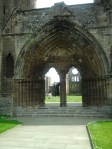
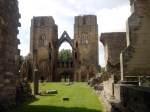
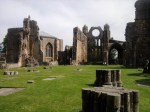
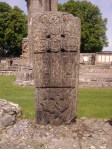
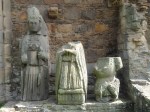
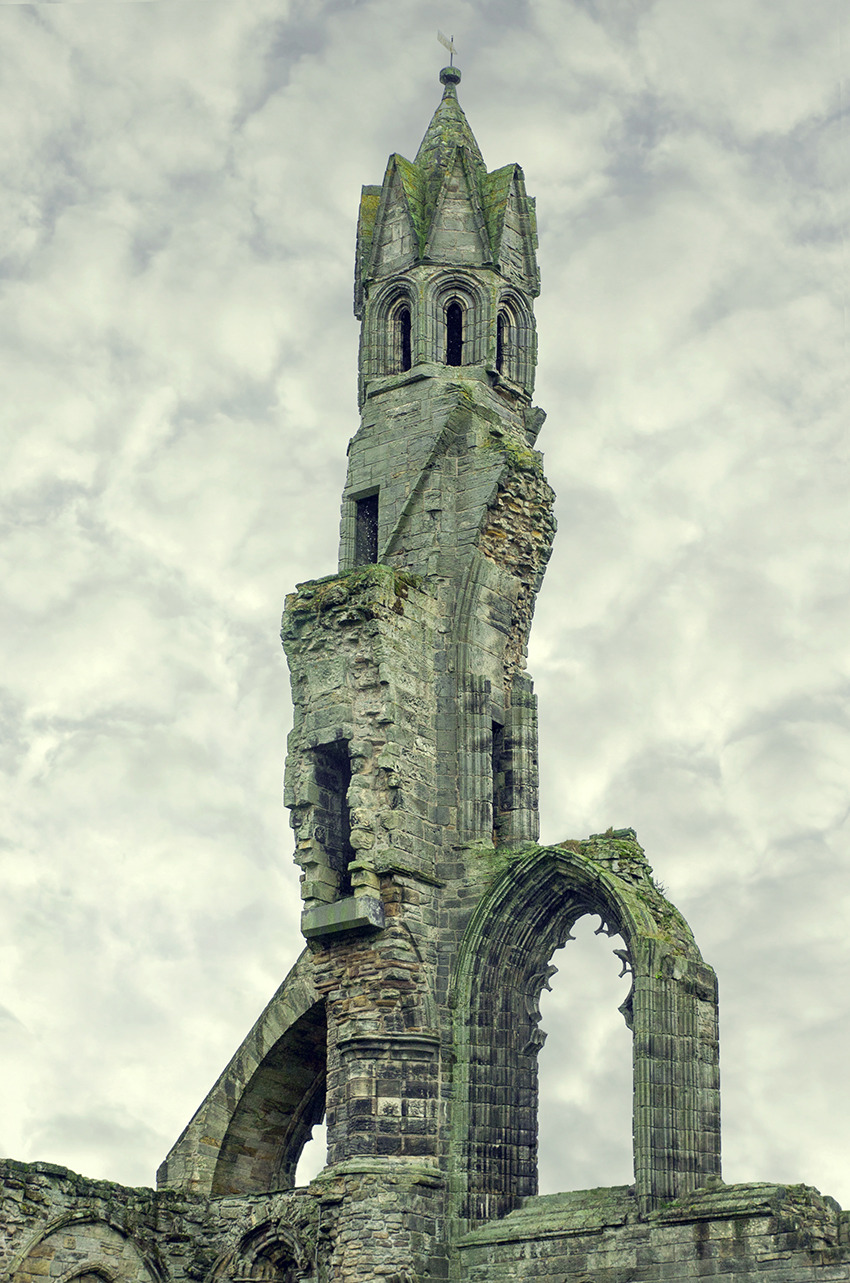
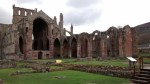
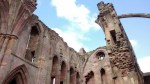
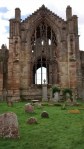
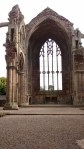
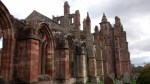
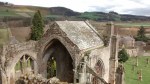
Though, as evidenced by the beautiful ninth century Pictish cross above, Elgin was an early centre of Christianity in Scotland, perhaps its most famous religious object is its cathedral. The cathedral, once the seat of the bishops of Moray, is a singularly stunning ruin, and was even grander in its heyday as a religious centre. In the words of one of its bishops, Alexander Bur, this great edifice was:
“the ornament of the realm, the glory of the kingdom, the delight of foreigners and stranger guests: an object of praise in foreign lands.”
However, for all its famed beauty, Elgin was not the first centre of the diocese. This distinction was claimed by three separate sites in the Laich of Moray- Birnie, Kineddar, and Spynie (where the bishop’s palace was later built- we’ll come back to this in a minute) and, as they were fairly close together, it was not too difficult for the bishops to travel from one to the other. This was in the twelfth century, but by the early thirteenth century, the building of a small cathedral was underway at Spynie, ostensibly because the previous cathedral, wherever this was, was in an inconvenient location. Spynie, however, was also unsuitable, it seems, for in 1224 the cathedral was moved to its present spot at the edge of Elgin. This move may also have been partly motivated by a wish for greater protection for the bishops and their cathedral through the close proximity of the royal burgh which had been founded in the twelfth century by David I, in order to reinforce royal control over the troublesome Moravians.
Whatever the reason, the new cathedral soon outstripped its less grandiose predecessors in size and in magnificence. By the mid-thirteenth century it housed 25 canons and 17 substitute clergy. The cathedral would not have been the only religious building in the chanonry, but was surrounded by manses (of which the precentor’s still stands, known erroneously as the Bishop’s House) and other church buildings, almost making the chanonry a separate settlement from the adjacent burgh. The cathedral itself grew quickly, and a large amount of rebuilding may have taken place after a fire in 1270. By the fifteenth century, one of the most impressive sections was possibly the huge central tower which rose above the crossing. Unfortunately this no longer stands, having collapsed at Easter in 1711, but it is known to have included at least three statues in niches at each corner (see the picture above) which were carved in the likeness of a bishop, a knight, and what is thought to be a burgess, representing the Three Estates. It has been surmised that there may have been a fourth, representing the king. Even without the central tower, the high towers of the nave and the splendid windows of the choir give some hint as to the glory Bishop Bur mentioned.
But, even if it contained a thriving royal burgh at Elgin, and a beautiful cathedral, mediaeval Moray was by no means a peaceful place. Though it is perhaps hard to see it in the low flatlands of the Laich, much of Moray’s terrain is hilly and, while it would have been inhospitable to many in the Middle Ages, remained a haven for caterans and brigands. Though it luckily escaped destruction during the Wars of Independence, Elgin was not safe, and by the late fourteenth century, Alexander Stewart, the Wolf of Badenoch, held sway in the area. His practice of extracting various payments from the local magnates and their tenants did not endear him to many of the other powers in the region, least of all the Bishops of Aberdeen and Moray, the former of whom is supposed to have had his property stolen and his peasants butchered. The latter meanwhile (the aforementioned Bishop Bur) having probably paid protection money to the Wolf in the 1380s, and made several property and land grants in his favour, eventually grew sick of being bullied by Stewart and switched his allegiance to Thomas Dunbar, the son of the Earl of Moray. This was unfortunate, as later political developments in Scotland as a whole led to a greater falling out between the Wolf and the Earls of Moray and, while Moray was in England attending a tournament held by Richard II, Badenoch seized the opportunity to launch a vicious attack on Elgin at the head of his cateran forces. Eighteen of the manses were burnt, as well as the greater part of the burgh and the cathedral itself. Though Bur wrote to Badenoch’s brother Robert III seeking compensation, and the cathedral was clearly rebuilt to a high standard (with Badenoch excommunicated for his crime), another assault in 1402, by Alexander of the Isles, served to reinforce the dangerous position of the cathedral and its priests.
Nevertheless, the cathedral continued to be regarded as a jewel in Moray’s crown right down to the sixteenth century. But, as with many of Scotland’s greatest religious foundations, the Reformation killed off worship there, and its bishops moved to the nearby parish church of St Giles. Though it was informally used for worship well into the 1600s, and the Earl of Huntly held a catholic mass there in 1594, the building gradually fell into decay. Luckily, it is now in the care of the nation, but it’s glory days are long since behind it. Even so, when standing in the beautiful shell of its former greatness, it takes little imagination to think of what must have been.
Spynie palace, meanwhile, is another example of the majestic surroundings that the Bishops of Moray so enjoyed. Though there was probably a residence next to the church in the thirteenth century, the earliest surviving masonry dates from the 1300s. When Lothian was struck by the plague in 1362, David II and his court were housed in Spynie by Bishop John, and several of the Stewart monarchs followed in his footsteps through visits to Spynie in the fifteenth century. James IV visited several times in the course of his annual visits to the shrine of St Duthac at Tain, and is known to have spent some time at the palace engaging in the rather less wholesome pursuit of cards, having always been a heavy gambler.
However, the most famous visitor to Spynie was, as in so many places, Queen Mary, who stayed there for two days in September of 1562. She was accompanied by a large armed force intended to bring the Gordon Earl of Huntly to heel, and after staying at Spynie, she departed for the Aberdeenshire, where her army defeated the Gordon forces at the Battle of Corrichie. At the time of her visit, the Bishop of Moray was Patrick Hepburn, the uncle of her future husband, the Earl of Bothwell and, after his defeat at Carberry Hill in 1567, Bothwell fled north to his uncle’s home at Spynie. Even there he was not safe, however, as according to an English spy held prisoner there, there were plots against his life. In turn, Bothwell killed a son of the bishop, before having his men take over the palace. Soon after, he had fled to Orkney.
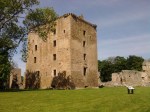
The great fifteenth century David’s Tower, which may be seen in the foreground of the picture above, dominates the palace, and bears the royal coat of arms, as well as the personal arms of three bishops- David Stewart, William Tulloch, and Patrick Hepburn. But this grand tower house was not the only feature of the complex- the Bishops lived in great style, surrounded by a great hall, a chapel, and at least three other towers. Though bishops continued to reside in the palace in the seventeenth century, the abolition of the rank of bishop in 1689 saw Spynie’s abandonment and ruin. But, like the cathedral, it’s magnificence is still present in some form, and the beauty of its position can’t be denied.
I just stumbled on Robert Burns’s response to a reviewer who criticised his ‘obscure language’. Now bear in mind a lot of Burns’s poetry was written in Scots, he took this slightly personally.
Ellisland, 1791.
Dear Sir:
Thou eunuch of language; thou Englishman, who never was south the Tweed;
thou servile echo of fashionable barbarisms; thou quack, vending the
nostrums of empirical elocution; thou marriage-maker between vowels and
consonants, on the Gretna-green of caprice; thou cobler, botching the
flimsy socks of bombast oratory; thou blacksmith, hammering the rivets
of absurdity; thou butcher, embruing thy hands in the bowels of
orthography; thou arch-heretic in pronunciation; thou pitch-pipe of
affected emphasis; thou carpenter, mortising the awkward joints of
jarring sentences; thou squeaking dissonance of cadence; thou pimp of
gender; thou Lyon Herald to silly etymology; thou antipode of grammar;
thou executioner of construction; thou brood of the speech-distracting
builders of the Tower of Babel; thou lingual confusion worse confounded;
thou scape-gallows from the land of syntax; thou scavenger of mood and
tense; thou murderous accoucheur of infant learning; thou ignis fatuus,
misleading the steps of benighted ignorance; thou pickle-herring in the
puppet-show of nonsense; thou faithful recorder of barbarous idiom;
thou persecutor of syllabication; thou baleful meteor, foretelling and
facilitating the rapid approach of Nox and Erebus.













 Rush's tumblr archive