As for including micro-aggressions into a story, here are some pointers:
Mind Intersectionality: Many things factor in and how and what racism a PoC might face such as being a Black man vs. a woman due to associated stereotypes, being fat, trans, gay, dark-skinned vs. light-skinned and so on.
For example: a middle to upper-class Black person who dresses, speaks, and acts in a way that conforms to society ideals of upstanding will likely be slapped with respectability politics more regularly (she’s not like those other Black girls/ I’m Blacker than you/you’re an oreo/) versus one who doesn’t.
They might be more often be viewed as ghetto and trashy, have AAVE spoken back to them mockingly, their speech corrected, overall treated more poorly, but note: respectability doesn’t save even the most “socially-acceptable” Black people, especially the moment one acts in a way they don’t like (e.g. passion or any raise of the emotion = angry, sassy, a violent threat).
Anti-Blackness is a Thing: Prejudice doesn’t just come from White
people, but from People of Color too, especially towards Black people
(there’s a version of the n-word through multiple cultures). Solidarity among PoC is not a given. I’ve faced
store-following, stereotyping, and lack of understanding of my struggles from Non-white people
too. I don’t encourage placing much of this in your story, but it feels like omission to leave out this fact. Although I’d actually like to see more POC solidarity and relationships in stories.
Don’t overdo it. If the character’s arc is not meant to be about racism, then don’t make it about racism. Facing micro aggressions is a part of their life, but not the subplot of their story. I don’t have a magical number of how many you should include (though 1-4 is plenty), however every situation they stumble in shouldn’t include a racist encounter.
They Can Come from Anyone: You really never know where you’re going to get hit with racism and from whom. I’ve encountered extremely kind old white men and extremely racist purse-clutching middle-aged white woman (and the exact reverse!). Realistically, one can’t necessarily know who will be/say racist things. Location is a factor too, such as being in a place where people aren’t use to PoC being around (which often onsets staring and suspicion, though it can happen anywhere).
Consider other daily struggles: I once read a story where a Black woman, being held against her will, was given provisions and being forced to ‘be comfortable’ and make any requests she wished, to which she noted how the provided shampoos wouldn’t work for her hair and requested the right products.
If micro-aggressions are being included for realism’s sake, note that blatant micro-aggressions are not the only way to go when including indicators for that ‘authentic’ touch. Sometimes it’s a matter of not being able to find your foundation color at a store or, alternatively, being surprised when you do (stores seem to be getting better at this these days).
Writing Reactions to Micro-Aggressions
Reactions to micro-aggressions vary. Consider a character’s situation and/or personality on what you feel their reaction might be to racism. Sometimes it’s not possible to act on the way one feels inside, such as in a work, formal situation, or given power dynamics.
Questioning self (Did that just happen? Did he really just call me that?)
Brushing it off. “Whatever.” “This happens all the time.” “Let’s just go.”
Forced friendliness (Like smiling, but gritting your teeth at the ignorance)
Snarky refute of comment (You call me chocolate? I’ll call you mayo.)
Telling off or calling out the behavior (“That was rude.” “Why would you say that?”)
Verge of tears or having some fall (whether in frustration, sadness or both. More likely if they’re not used to this treatment, but everyone is different. I teared up the first time a white woman clutched her purse when I walked by. Now I roll my eyes to outer space.)
NOTE: No matter what reaction an affected character has, you, the author, should not dismiss this behavior and therefore ‘okay’ it to the audience. Showing it is wrong in some way or another (using another character, refuting the prejudice thought later) is ideal.
We’ve all been warned about the dangers of using too much description. Readers don’t want to read three paragraphs about a sunset, we’re told. Description slows down a story; it’s boring and self-indulgent. You should keep your description as short and simple as possible. For those who take a more scientific approach to writing fiction, arbitrary rules abound: One sentence per paragraph. One paragraph per page. And, for god’s sake, “Never open a book with weather” (Elmore Leonard).
But what this conventional wedding wisdom fails to take into account is the difference between static and dynamic description. Static description is usually boring. It exists almost like a painted backdrop to a play. As the name suggests, it doesn’t move, doesn’t interact or get interacted with.
There were clouds in the sky. Her hair was red with hints of orange. The house had brown carpeting and yellow countertops.
In moderation, there’s nothing wrong with static description. Sometimes, facts are facts, and you need to communicate them to the reader in a straightforward manner.
But too much static description, and readers will start to skim forward. They don’t want to read about what the house looks like or the stormy weather or the hair color of each of your protagonist’s seventeen cousins.
Why? Because they can tell it’s not important. They can afford to skip all of your description because their understanding of the story will not be impacted.
That’s where dynamic description comes in. Dynamic description is a living entity. It’s interactive, it’s relevant. It takes on the voices of your narrators and characters. In short, it gives us important information about the story, and it can’t be skimmed over.
So how do you make your description more dynamic so that it engages your readers and adds color and excitement to your story? Here are a few tips.
(I have a TON more tips about setting and description. These are just a few. But I’m trying to keep this short, so if you have any questions or want more advice about this, please feel free to ask me.)
Another thing that helps is comparisons. Obviously, you can go overboard, but even a mental picture can be worth a thousand words.
For example, I could say there are two very tall trees, very bowed in a way that the tops met and they formed an arch. That gives you a decent idea of what it looks like objectively, but if I added that it all had the poise and stateliness of an old church, it makes you think about it in that light.
You can do this with characters too, but tread lightly. Some comparisons have a nasty history and can make your readers not want to read more because it feels distasteful. But if you use some basic decency and respect, and do your research, it can be very effective.
For example, one of my characters was very quiet, meek, didn’t really take care of herself a lot, so I described her as having hair with the look of dead straw and hands as pink and bony as mouse paws.
But don’t worry, most writers are and I’m here to help because reading them is making me cRAzY.
I’m writing this because I’ve read three otherwise great romance novels back to back featuring characters dealing with PTSD (or PTSD symptoms) and each one of them made the same dream mistakes. I honestly can’t think of a fiction book I’ve read that didn’t make these mistakes, so I thought I’d compile a handy dandy list of mistakes and how to fix them.
Lucky for you, I have PTSD and a ton of fellow veteran friends who deal with these symptoms.
*This is based on my experience and things told to me by friends. This is not to say that the below doesn’t happen in real life, only that it’s not as common as you might think.
The issue with these dreams is twofold: on one side is the psychological accuracy of the dream and on the other side is how you’re using the dream within the narrative.
Oh an Black Sails spoilers-ish ahead.
1) Stop writing the dream as a shot-by-shot accurate retelling of Traumatic Event.
Listen, not only do dreams seldom follow reality, but our own memories are tricky at best. I don’t remember getting beaten up because a) it was horrifying and we block stuff like that out and b) I was going in and out of consciousness. It would be pretty strange for me to dream something I don’t even fully remember. Our brains are simply not wired to do these vivid factually-accurate cinematic retellings.
My friend dreams things that did happen, but in his own words those dreams are always wrong in some noticeable or bizarre way. For instance, he’s getting chased through the streets of Iraq by a werewolf.
2) Dreams are informed by reality, not direct reflections of it.
It’s entirely likely my friend dreamt of a werewolf in Iraq because I got him binge watching Supernatural and the two ideas merged in his dreamstate. But see, that’s how dreams work.
The trauma event exists as a constant in his subconscious, but he has all this other information right there in his conscious mind all day, every day. In dreams, there isn’t a clear delineation between that information.
My dreams are often dependent on whatever I’ve fallen asleep watching on television. The themes are consistent, but not the content.
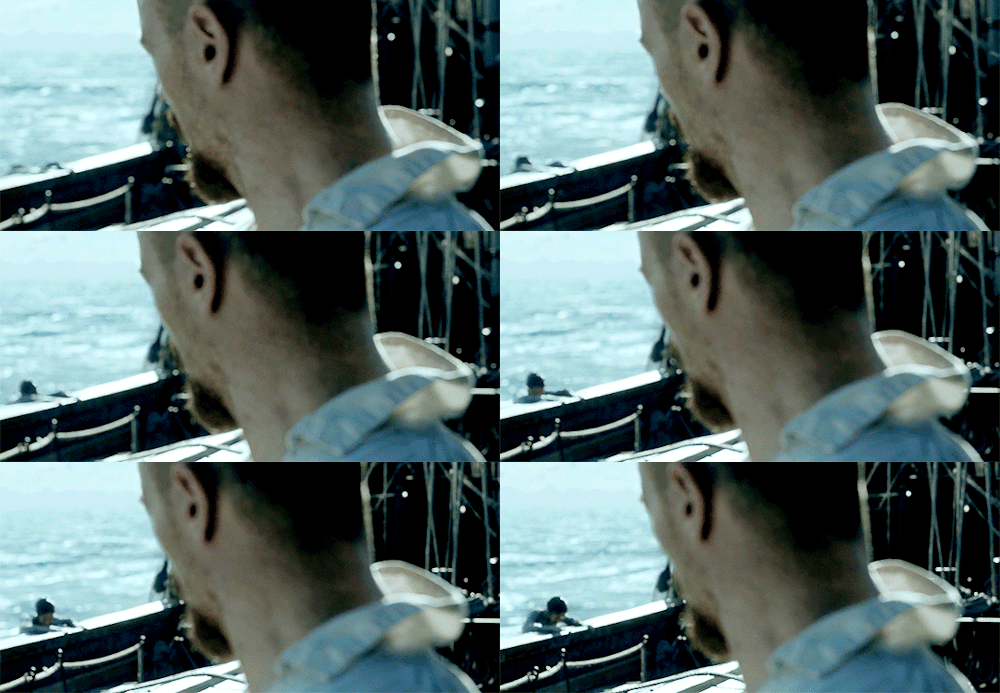
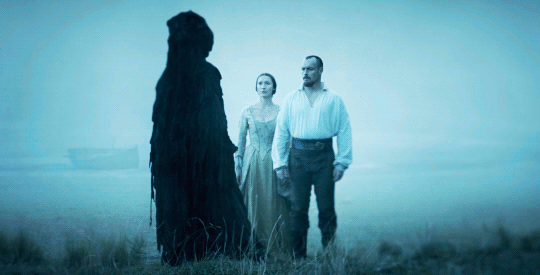
In Black Sails, Captain Flint’s trauma dreams feature his dead partner and friend following him around his empty ship. You have an element of the trauma (the animated corpse of his friend) + his daily existence (his ship). The two things intersect to form these unsettling nightmares as expressions of his fears and grief. He never once relives the event itself in his dreams as shown on screen.
Speaking of…
3) Trauma dreams often revolve around feelings, not necessarily the events themselves.
The PTSD package generally includes heaps of shame, guilt, anger and fear. As someone who survived a beating when I should have had control of the situation, my dreams tend to revolve around fear that people will know I’m a fraud or being unable to act in a dangerous situation.
Again, it’s entirely common for trauma victims to not remember large chunks (or the whole thing) of the trauma event. So why should their dreams be stunningly accurate? What we remember are feelings. Real strong feelings.
You cannot go wrong if you write your trauma dream around feelings, not a specific event.
4) If you present trauma dreams as expressions of themes, you can let go of the trauma dream as an exposition dump/way overused suspense trope.
You know you’ve read this: MC has dreams that are a shot-by-shot retelling of Traumatic Event that always cut off right before Traumatic Event, so that the Big Reveal must happen by a discovery later in the novel.
If I were the MC in a book, the easy and common thing would be to use the “dream sequence” as an expository retelling of Traumatic Event as a way to give some backstory to why I might be surly, mistrustful, afraid to try something new, whatever, and to clumsily shoehorn in suspense where there doesn’t need to be.
The much more interesting thing might be if my dreams were inconsistent in content but consistent in theme. In one I’m on an alien planet (because I fell asleep watching the Science Channel again) and the ground opens up and I fall into a pit from which I can’t escape because I am helpless. In another a man is watching me while I sleep where I am again frozen and helpless. This would force the reader to think: what is the recurring issue in these dreams? Why is it important? What is this telling me about this character and what happened to her?
It could be a personal preference, but I’d rather see the Traumatic Event either told in narrative flashbacks (not dreams) or verbally retold by the character in question. Let the dreams tell me something deeper about the character. It’s not that I was beat up, it’s that I feel like a failure because of it. One of these things is a shallow factual detail, the other tells you something about me as a person that I’m sharing with you, gentle reader, because talking about this stuff is healthy.
5) The Traumatic Event doesn’t have to be a big secret.
In Black Sails, we know what happened to Captain Flint’s partner. It happened in real time in the show. That didn’t make his uber disturbing dreams less disturbing or mysterious. Fans still debate exactly what the symbolism was and what they were telling us about James Flint in those moments. We do know from the dreams that he was disturbed, obsessed, and also monumentally guilty and blaming himself for what happened.
The mystery was perhaps more heightened by the fact that the dreams weren’t direct reflections of reality. We know who this person was, what she believed, and why she died. That Flint is imagining her screaming silently in his ear is horrifying and discordant with what we know to be factual. This adds emotional complexity to his character and the decisions he’s making while suffering these dreams.
^^^this didn’t happen. It was a dream. A real unsettling dream.
Once you let go of the concept of the trauma dream as a literal retelling and exposition dump, you have the entire dreamscape to work in other narrative elements, like symbolism, metaphor, foreshadowing, etc.
Once you let go of the concept of the trauma dream as a literal
retelling and exposition dump, you have the entire dreamscape to work in
other narrative elements, like symbolism, metaphor, foreshadowing, etc.
This is important, because this is how our brains work. I had trauma dreams on a regular basis for eight years. Although the majority of them included an image of the traumatic event, they were never retellings of what happened. The trauma image would pop up in completely unrelated stories or settings, or the dream would involve seeing something different but equally traumatic. I can’t remember the physical details of my trauma – i never could; even at the time it happened, I didn’t register any details – but the feeling stays with you and finds it’s way into your dreams.
Then there’s the challenge of finding a way to bull’s-eye each individual, microscopic cell body without exciting neighboring neurons. Enter computer generated holography (CGH) to create three-dimensional floating light shapes. The diffracted light-forms are projected into the brain, sailing through a gossamer layer of brain tissue at the surface of the cortex and triggering just the right pattern and rhythm of neural activity to generate specific sensations and perceptions. The holograms can stimulate, edit and suppress patterns of neurons that correlate with the brain activity of actual experiences.
Don’t characterize a Black character as sassy or thuggish, especially when the character in question is can be described in literally ten thousand other ways..
Don’t describe Black characters as chocolate, coffee, or any sort of food item.
Don’t highlight the race of Black characters (ie, “the dark man” or “the brown woman”) if you don’t highlight the race of white characters.
Think very carefully about that antebellum slavery or Jim Crow AU fic as a backdrop for your romance.
If you’re not fluent with AAVE, don’t use it to try to look cool or edgy. You look corny as hell.
Don’t use Black characters as a prop for the non-Black characters you’re actually interested in.
Keep “unpopular opinions” about racism, Black Lives Matter, and other issues pertinent to Black folks out the mouths of Black characters. We know what the fuck you’re doing with that and need to stop.
Don’t assume a Black character likes or hates a certain food, music, or piece of pop culture.
Be extremely careful about insinuating that one or more of a Black character’s physical features are dirty, unclean, or ugly.
Feel free to add more.
Adding more…
Be wary of making Black characters seem animalistic, uncivilized, or subhuman in comparison to white characters. Watch out for: comparing us to monkeys, gorillas, chimpanzees, apes, and other animals.
Words like Negroid, colored/colured, Negro, and the n-word do not belong in the mouths of contemporary characters you want to portray as sympathetic.
Not all Black people are African American.
Africa is not a country but the second-largest continent on earth with some 54 different countries with thousands of ethnic groups and 1,500 to 3,000 languages and dialects.
Resist the urge to make a Black character seem uneducated and ignorant compared to white characters.
Capitalizing Black shows that you recognize that the word unifying people of African descent, particularly the diaspora, should be described using a proper noun.
Please, say “Black people,” not “blacks.”
Give Black characters the same psychological and moral complexity as white men are given by default.
Make sure that you don’t write a Black character as happily subservient to a white character.
Understand and show that you understand that Black characters don’t exist to be the caretakers of white characters.
And more…
Do your own homework instead of expecting, asking, or demanding Black fans to do it.
Before approaching that Black person you admire so much for being so articulate about race issues (this is sarcasm) to beta read your work: 1) make sure it’s something they’ve expressed interest in doing, and 2) you offer something in return for their time and expertise.
Be prepared for fans to have issues with what you came up with and open to suggestions.
Having only one Black character in a story that takes place in a huge city, country, or galaxy looks weird. Really, really weird. Scary weird.
Don’t use a Black character’s death to motivate a white character.
Portray Black characters with complex and multifaceted identities. We are more than just Black. We are also women, LGBT, Jewish, disabled, neurodivergent, immigrants, etc.
There is a huge chasm between hypersexual and desexualized.
Remember: what’s progressive for a white character is not necessarily progressive for a Black one.


 Rush's tumblr archive